
Find Bledsoe County Genealogy Records
Bledsoe County Genealogy research has a sharp edge because the county lost a large share of its early books in the 1908 courthouse fire. That means the search starts with what still survives, then shifts to outside help when a book is gone. The county seat is Pikeville, and the surviving record trail still includes land, probate, court minutes, archives material, and local history sources. If you know how to work around loss, Bledsoe County can still give you a strong family line.
Bledsoe County Genealogy Records
Bledsoe County was formed on November 30, 1807 from Roane County. The county seat is Pikeville. The research notes are blunt about the fire loss: many pre-1908 records were destroyed, the earliest deed books are lost, pre-1884 wills are lost, and marriages from 1807 to 1907 are lost. That is a severe break in the paper trail, but it also tells you exactly where to focus. Bledsoe County Genealogy works best when you follow the surviving series and use outside indexes to fill the rest. The strongest surviving county records include marriage records from 1908 forward, probate records from 1883 forward, county court minutes from 1841 forward, and land and deed records from 1808 forward.
The county also keeps access points through the circuit court clerk and the clerk and master. The circuit court clerk notes chancery court minutes from 1836 and circuit court minutes from 1845, while the clerk and master handles probate and chancery work. When you cannot find a marriage in the county clerk books, these other offices may still hold a clue through a court case, land transfer, or estate proceeding.
The first Bledsoe County image source is the county TNGenWeb page at tngenweb.org/bledsoe. It is a useful starting point because it includes transcribed death certificates, marriage indexes, deed abstracts, cemetery work, and Sequatchie Valley resources.
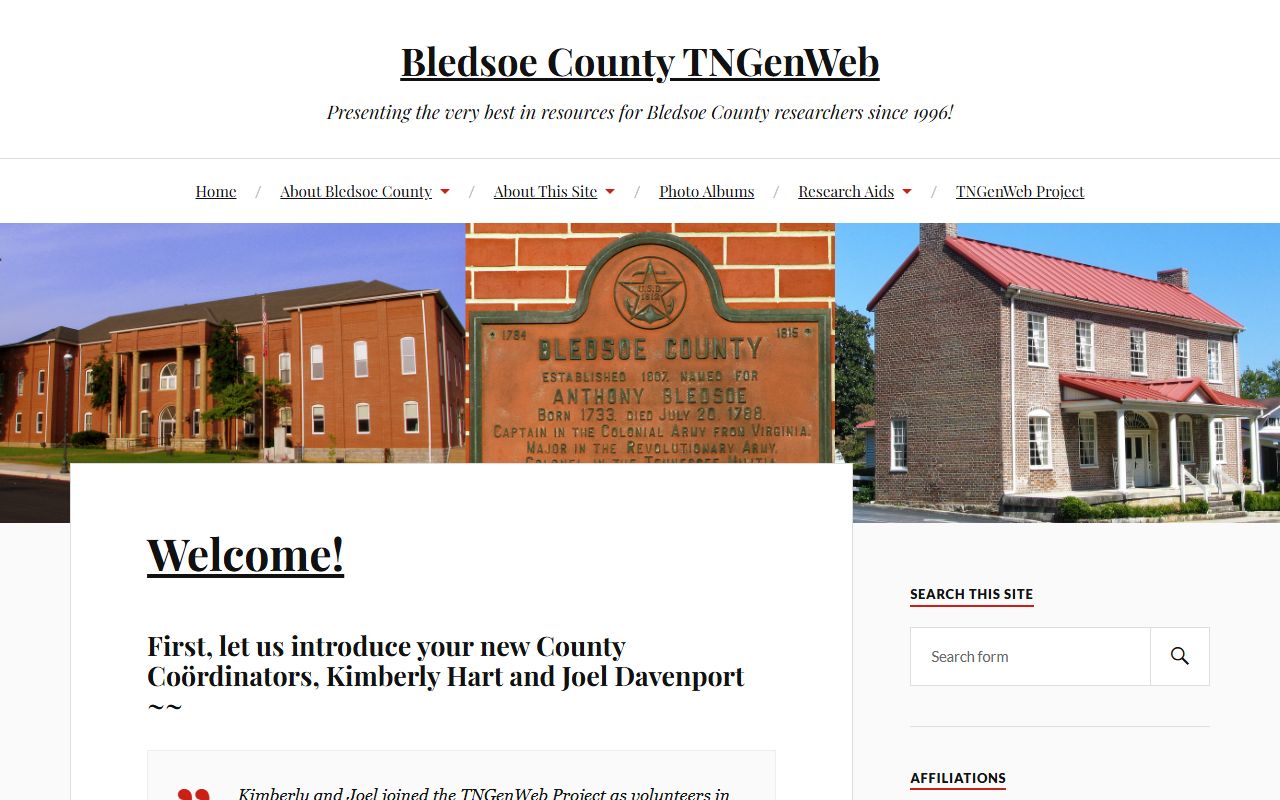
That page is especially helpful when you need a name clue before you make a copy request.
Surviving Bledsoe County Genealogy record groups include:
- Land and deed records from 1808 forward
- County court minutes from 1841 forward
- Probate records from 1883 forward
- Marriage records from 1908 forward
- Chancery and circuit court minutes from the clerk offices
Bledsoe County Genealogy at County Offices
The county clerk is Genese A. Sapp, and the office is listed at P.O. Box 212, Pikeville, TN 37367, or 3150 Main St Ste 100. The phone number is (423) 447-2137. The office hours are Monday, Tuesday, Wednesday, and Friday from 8:00 AM to 4:00 PM, and Saturday from 8:00 AM to noon. That office is the best local stop for marriages, probate, and county court minutes.
The register of deeds is Jeanine Boynton, at P.O. Box 385, Pikeville, TN 37367, or 3150 Main Street. The phone number is (423) 447-2020. That office keeps the land and deed records, and in Bledsoe County those land books are especially valuable because the earliest deed books were lost. The deed index still gives you a path to the surviving material, which is often enough to anchor a family line.
The county notes also help explain older marriage practice. Before 1908, the county had a much larger marriage loss, and the surviving trail often shifts to loose papers, church notes, or records held elsewhere. If you are missing a direct marriage record, do not assume the marriage never happened. In Bledsoe County, the record may simply be in another form.
Note: Bledsoe County's loss patterns make land records and court minutes more important than usual, so always search those before you stop.
Bledsoe County Genealogy Resources
The Bledsoe County Public Library is at 478 Cumberland Ave., P.O. Box 465, Pikeville, TN 37367, and it has a genealogy department with local history material. The Bledsoe Historical & Genealogy Society is another key stop. The society keeps compiled family histories, Bible records, and material not held in the official repositories. In a county where the courthouse burned, those private and club collections can be the difference between a dead end and a usable family line.
The county historian is Miss Elizabeth Robnett, and the research also names a county historian connection in Pikeville. That kind of local help is useful when you are trying to tie one surname to a church, cemetery, or ridge settlement. Bledsoe County families often stayed in the Sequatchie Valley region for generations, so one good local clue can unlock a long stretch of records.
Published local records add another layer. The research lists TNGenWeb resources, a pictorial history, a county history by Elizabeth P. Robnett, deed book abstracts, and marriage record volumes for 1908 to 1924. Those compiled works are worth checking because they often preserve material that was lost in the fire or scattered before the fire. When a family appears in a deed abstract, a cemetery list, and a Bible record, you are often looking at the same line from three angles.
Bledsoe County Genealogy Online
Online Bledsoe County Genealogy research is strongest on the TNGenWeb page. The county page includes death certificates from 1908 to 1912, a marriage index from 1908 to 1924, deed book abstracts, cemetery transcriptions, and Sequatchie Valley resources. That mix is especially useful in a county with heavy loss because it gives you a fast way to test whether a family is present before you request copies.
TSLA remains central. The county research points to microfilm for deed books, county court minutes, chancery court material, marriage records, wills, and tombstone inscriptions. The county also notes that TSLA is essential for filling gaps. That is not just a generic statement. In Bledsoe County, TSLA is the difference between a complete line and an open gap in the 19th century.
The Tennessee State Library and Archives and the FamilySearch Tennessee records page should be used together when you are checking names. The Tennessee Virtual Archive can also help with digitized material. State resources matter more here than in some counties because Bledsoe County's loss is so large.
Bledsoe County Genealogy is one of those searches where the right outside source can save hours of guessing. If the county book is missing, look for a transcription, a church minute, or a state microfilm copy before you give up.
Filling Bledsoe County Gaps
When a Bledsoe County family is hard to place, start with the land books and the court minutes. The research notes make it clear that marriages and early wills are missing, but land records survived better than the other series. That means property movement can stand in for a missing marriage or probate record. A deed, a witness name, or a repeated neighbor can tell you more than you expect.
The county's historic loss also means you should widen the search to nearby counties and state sources. A Bledsoe family may appear in a marriage record, church record, or cemetery list in a neighboring place even when the direct county book is gone. That is normal, not a mistake. The paper trail just moved.
Use the county offices, the library, the society, TSLA, and the TNGenWeb site as one search system. That combination gives you the best chance of rebuilding a Bledsoe County line with confidence.