
Carroll County Genealogy Records
Carroll County genealogy work has a good mix of paper and local memory. The county was organized early, and its courthouse burned in 1931 without losing the records, which is a rare break for a Tennessee family search. That means a lot of the county trail still survives, but the search still needs a plan. The courthouse, county library, museum library, West Tennessee heritage center, TNGenWeb, and state tools all play a part. A researcher who works Carroll County well usually checks more than one place before settling on a line.
Carroll County Genealogy Records
The county clerk handles marriage records from 1838, birth and death records from 1908, court records from 1821, land records from 1820, and probate records from 1822. The register of deeds handles land records from the start of county organization in 1822. That gives Carroll County researchers a broad run of records once the line reaches the 1800s.
The county has no official online searchable database, so a good Carroll County search starts with a written request or an in-person visit. The office notes matter here. Staff do not perform research, and a search must be done in person. If you mail a request, a notarized signature may be needed for certified copies. That is a useful detail to know before you drive.
Carroll County genealogy is also shaped by a marriage gap. There is a lack of marriage records from 1821 through 1837, so a couple may first show up in a deed, a census, a probate file, or a church note instead. That makes the search a little wider, but it also makes it more interesting.
Strong Carroll County starting points include:
- Marriage records from 1838
- Birth and death records from 1908
- Court records from 1821
- Land records from 1820
- Probate records from 1822
Carroll County Courthouse Records
The Carroll County courthouse is one of the better survival stories in West Tennessee. The 1931 fire burned the courthouse, but the county saved the records. That single fact changes the work in a big way. Instead of planning around major loss, you can plan around access and detail. The records still need care, though, because the office does not run a broad public search for you.
If you request a copy, bring names and dates as tight as you can. Photo ID is needed for in-person requests, and a notarized signature may be required for some mail requests. That is a small step, but it helps the county office answer the right question the first time.
Because the courthouse records survived, Carroll County genealogy can move quickly once you find the right book. A deed can show a farm line. A probate file can name heirs. A court record can show a dispute or a transfer. When the books are still there, they can do a lot of work.
The county clerk and register of deeds together give you a clear courthouse path, even without a web database. That is the practical center of a Carroll County search.
Carroll County Genealogy Libraries
The Carroll County Library in Huntingdon is a strong local lead. Its genealogy room holds more than 300 books and 300 rolls of microfilm, plus family histories and newspapers like the Carroll County Democrat, McKenzie Banner, and Dresden Enterprise. That is a real help when you want names, dates, and local places instead of just a certificate copy. The Gordon Browning Museum and Genealogical Library in McKenzie goes even broader. Its holdings include tax records, church records, city records, store and business records, deeds, marriage records, probate records, military discharges, court minutes, and obituaries.
The West Tennessee Heritage Study Center at Paul Meek Library is another smart stop. It covers Carroll County and nearby counties across West Tennessee, so it helps when a family moved between county lines. The Carroll County TNGenWeb page at tngenweb.org/carroll is another local guide. It adds cemetery records, marriage records, military records, biographies, and community histories to the search. That wider net is useful when the line shifts or a surname repeats in more than one place.
The image below points to the Carroll County TNGenWeb page, which is a good online start for county family history work. It is one of the clearest county-level clues for Carroll County genealogy.
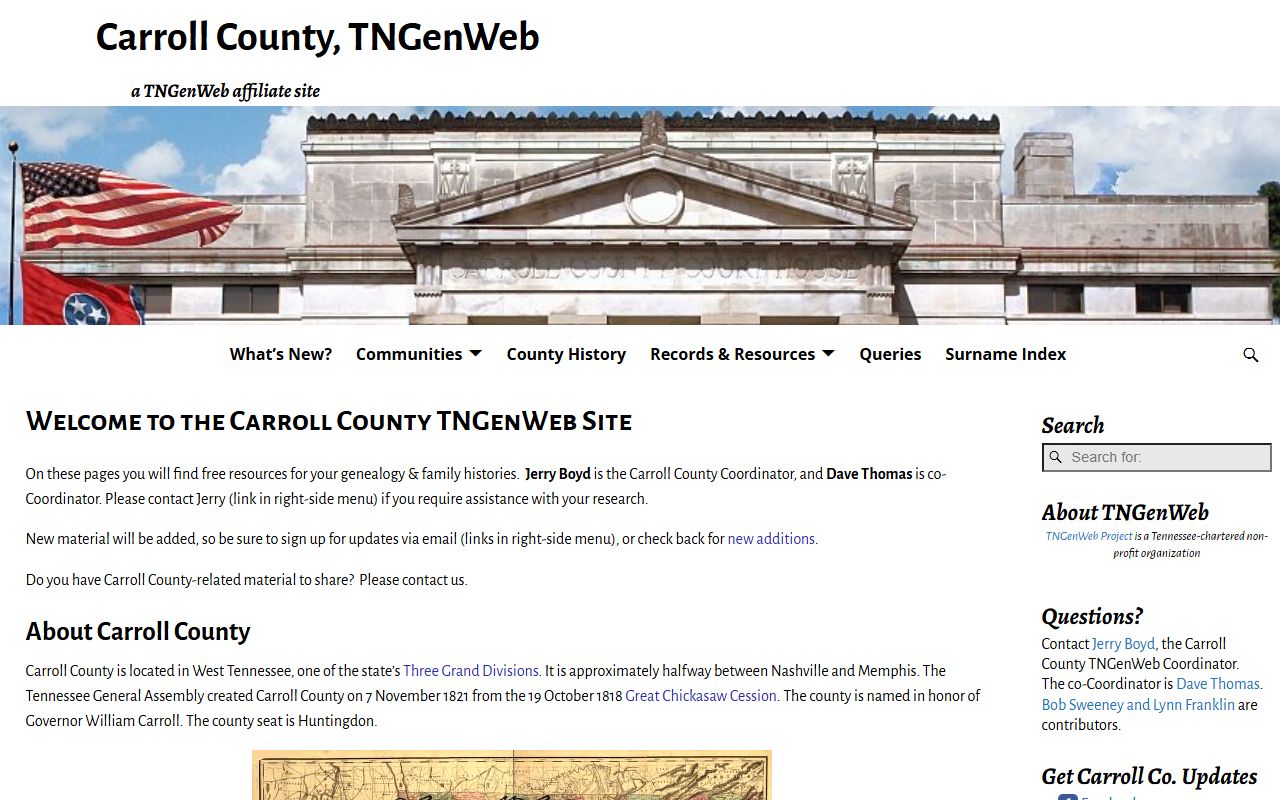
Use that page when you want local clues before you ask for a courthouse copy or book a visit. The image below points to the Carroll County TNGS data page, which is useful when you want another county-specific entry point for names and family leads.
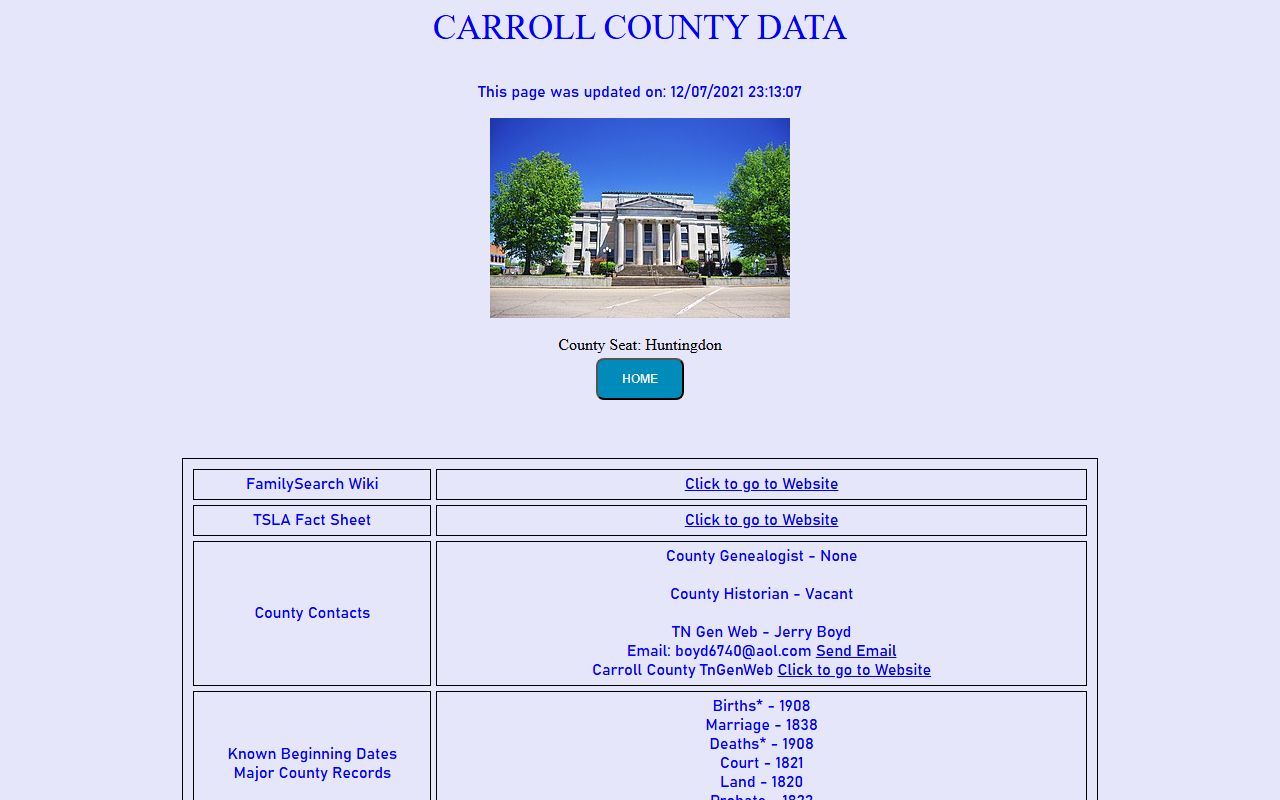
That data page can help you spot a family note before you move into the county books.
Carroll County Genealogy Online
Carroll County has no official online searchable database, so the best web work uses a mix of county and state sources. Start with TNGenWeb and the Tennessee Genealogical Society Carroll County data page. Then move to TSLA, TeVA, and FamilySearch Tennessee. Those sources help you check a name before you call or visit.
State resources fill the gap when the county office needs a written request or an in-person search. Tennessee Electronic Library and the Tennessee Genealogical Society are both good backup tools for history and family research. They are especially helpful when a family moved through more than one West Tennessee county.
Carroll County researchers also benefit from the county's strong local newspaper and museum trail. Those sources may not always be indexed well, but they can still point to a burial, a marriage, or a family move that the courthouse files do not spell out.
That mix of county files, local books, and state help makes Carroll County one of the easier West Tennessee counties to work once you know where to look.
Carroll County Family History
Carroll County genealogy is strong because the records survived and the local sources are wide. That gives you a real chance to move from a name to a line without too much guesswork. A marriage entry can lead to a deed, a deed can lead to a probate file, and a newspaper note can tie the same family to a place.
The lack of marriage records from 1821 to 1837 is still a real limit, so do not expect every early couple to be easy to spot. But the county's saved courthouse records, library holdings, and museum library give you other routes in. That is enough to build a solid family story with care.
Note: Carroll County preserved its courthouse records after the 1931 fire, so the main job is often access and matching, not recovery from total loss.