
Claiborne County Genealogy Records
Claiborne County genealogy work rewards patience. The county had courthouse fires in 1863 and 1931, and both caused real loss. That means the first records you find may not be the full story. Still, the county has a strong archive office, a good public library, and solid Tennessee state support. Start in Tazewell, then push out to TSLA, TNGenWeb, and the state vital records office when the local trail runs thin. The best searches here use one name, one place, and one date range. If you keep the search narrow, the surviving books can do a lot of the heavy lifting.
Claiborne County Genealogy Records
Claiborne County keeps a deep set of records, even though the early years are uneven. The courthouse books start early, and the archive office preserves a large run of originals and later files. That helps a great deal when you are trying to prove a family line that goes back before the fires. You may not find every early marriage or will, but you can still often find land, probate, tax, and court clues that point to the right people.
The county research gives a clear outline of what survives and what does not. Use it as a map. When one record type is missing, move to another one from the same decade. In Claiborne County, that is often the fastest way to close a gap.
- Marriage records from 1838
- Land records from 1801
- Court records from 1801
- Probate records from 1801
- Birth and death records from 1908
The lost record list matters too. Claiborne County lost the 1810 and 1820 censuses, and the early marriage and will books are thin before the mid-1800s. That makes cemetery books, tax rolls, and military files more useful than they might be in a county with a better paper run. It also makes the archive mission statement important, because the county archive exists to collect, conserve, and make local originals available for research.
Claiborne County Genealogy Sources
The Claiborne County Archives is one of the strongest local tools in this area for Claiborne County genealogy. Its holdings include marriage, probate, deeds, tax, wills, merchant licenses and bonds, and circuit court records from 1800 through the 1980s. The office is on Montgomery Street in Tazewell, and the archive page at Claiborne County Archives is the best local starting point when you need the county's own description of access and holdings. If you are tracing a family that stayed in the county for generations, this office can save a great deal of time.
The Claiborne County Public Library, also in Tazewell, adds newspaper microfilm, donated family files, cemetery books, and census books. That mix helps with the kind of proof a Claiborne County genealogy researcher actually needs. A death notice can point to a spouse. A cemetery list can explain a gap in the census. A donated family folder can connect two surnames that never line up in a court minute. The local historical and genealogical society is another help point when you need a human who knows the county history.
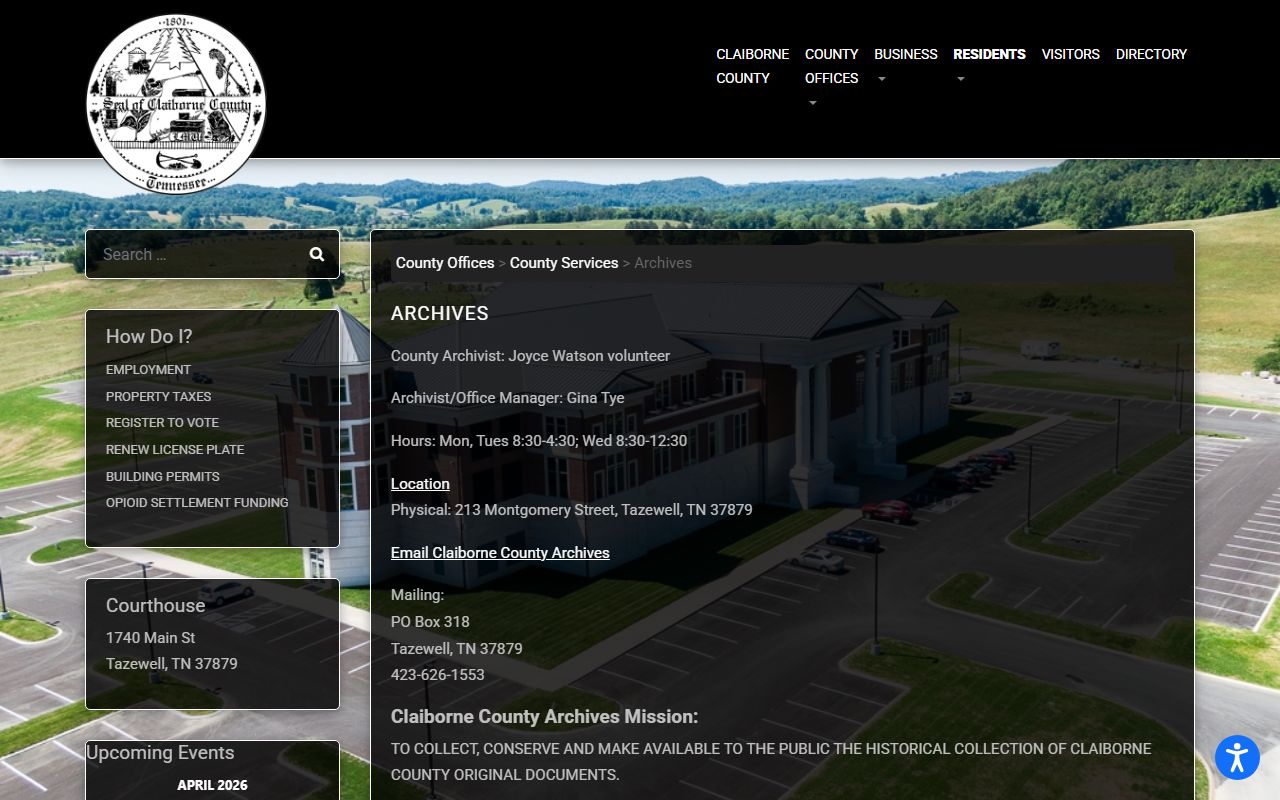
That page is especially useful when you want the archive contact path before you begin a deeper surname search. The Claiborne County TNGenWeb page at Claiborne County TNGenWeb points to Revolutionary War records, War of 1812 pensioners, Civil War records, cemetery transcriptions, and deed abstracts. Those categories are a strong fit for a county with early loss, because they help you work around the missing marriage and will books.
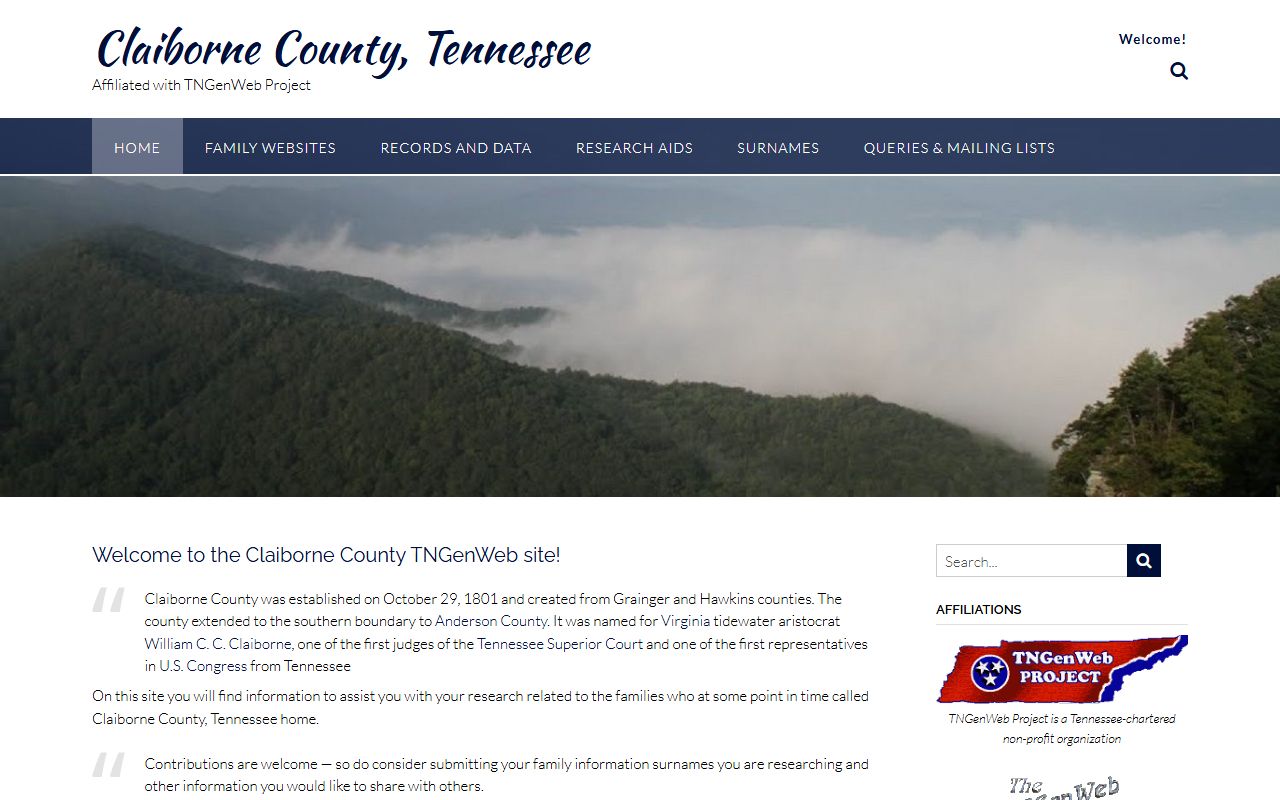
That county page is a practical bridge between the archive and the older family names that show up in military and cemetery work. The Claiborne County TNGS data page at Claiborne County TNGS Data adds another research layer for Claiborne County genealogy.
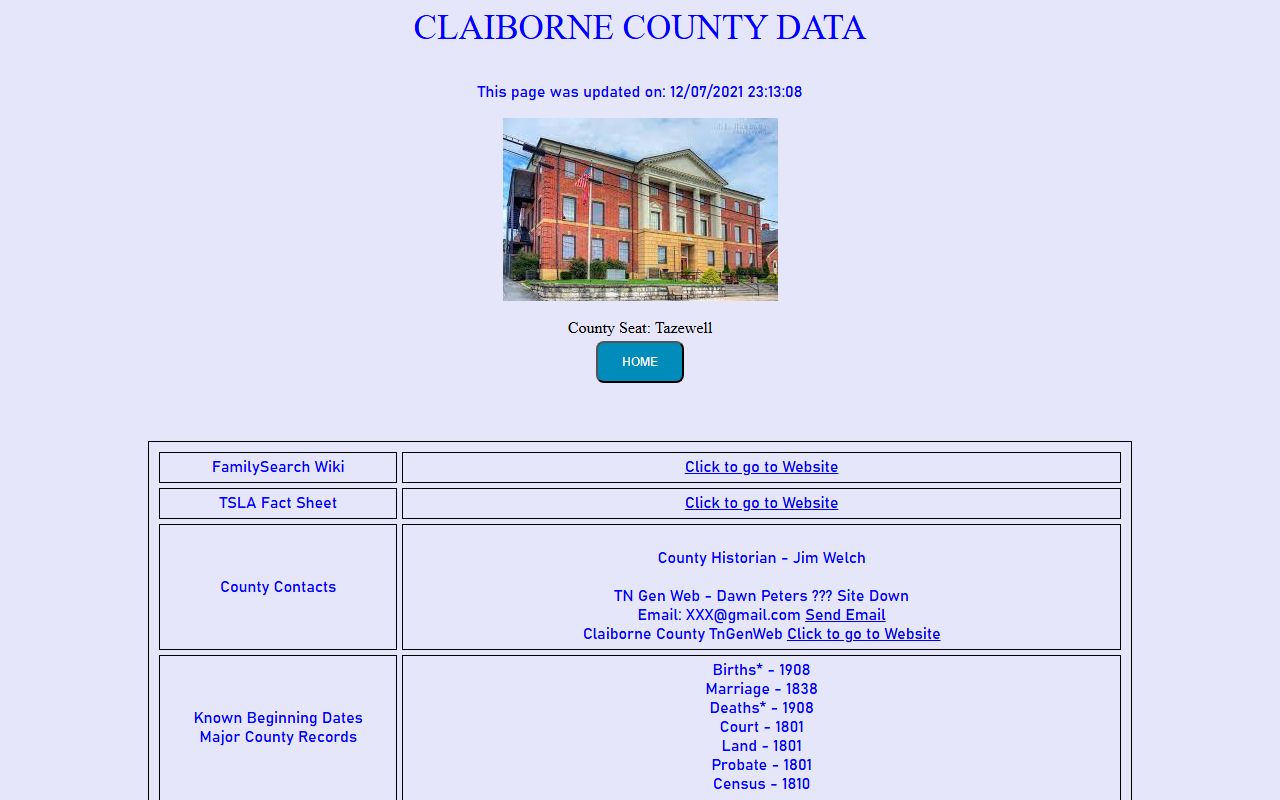
That source is a good reminder that county research gets stronger when you compare local names against a broader Tennessee set and keep the Claiborne County genealogy search broad enough to survive the fire loss.
Searching Tennessee Genealogy Sources
Claiborne County is in East Tennessee, so state and regional sources matter a lot. TSLA is important for microfilm, county copies, and older record sets that can stand in for damaged local books. The Tennessee Virtual Archive is useful when you want digitized records or images that can support a family trail. For modern certified copies, the Tennessee Office of Vital Records remains the formal state route. Each of these sources can help when the county page by itself does not give you enough detail.
Regional help matters too. The East Tennessee Historical Society and the Archives of Appalachia at ETSU both fit Claiborne County research well because they collect regional manuscripts, family papers, photographs, and local history material. Those collections are not the same as courthouse books, but they often contain the sort of supporting evidence that makes a line clear. For a county with fire loss, that extra layer is valuable.
Good state links for Claiborne County research include TSLA, TeVA, Tennessee Office of Vital Records, TNGenWeb, FamilySearch Tennessee, Tennessee Genealogical Society, and East Tennessee Historical Society. If you need a fuller backstop for a line that starts before the courthouse fires, TSLA and the regional collections should be first on your list.
When a Claiborne County search stalls, compare one source from each level. Use the county archive, then a state microfilm source, then a regional history source. That sequence often turns a broken trail into a usable one.
Plan a Claiborne County Visit
Tazewell is the right place to start in person. The courthouse, archive, and public library are all close enough to make one research trip practical. Because the county lost some early records, it helps to go in with a very specific plan. Ask for the record type first. If that fails, ask for the decade and then the family name. In Claiborne County, the order of the request can matter as much as the request itself.
The best visit prep is simple. Write down the surname, the spouse, the county place, and the date range. If the family shows up in a cemetery book or in a military file, add that too. Those clues can bridge the gap left by the fires. The archive and library staff know the local history well, so a focused request usually works better than a broad one.
- Name and spelling variants
- Approximate date or decade
- Record type, such as deed, probate, or marriage
- Known spouse, parent, or child name
- Any cemetery, church, or military clue
Note: Claiborne County research is best when you treat the fires as part of the search plan, not as a dead end.