
Search Cumberland County Genealogy
Cumberland County genealogy research works best when you start in Crossville and keep an eye on the neighboring counties. Cumberland County was formed in 1855 from surrounding counties, so families can appear in more than one place before the county line settles into the record. That makes location clues important. When you know the county seat, the courthouse, and the nearby counties, it is easier to sort the right family from the wrong one. A strong Cumberland County genealogy search usually begins with a surname, then moves into land, marriage, and local history sources.
Cumberland County Genealogy Sources
The main county entry point in the research is the Cumberland County TNGenWeb page. It is the right place to begin if you want a local map of Cumberland County genealogy material. Cumberland County research often points to Crossville, but the county borders many other Tennessee counties, so you need a wide eye. The bordered-by list in the research makes that clear. If a family disappears from one line, it may reappear in one of the surrounding counties.
The Cumberland County TNGS Data page gives you another local path. It can help you compare names and dates before you branch out into state repositories. That matters in Cumberland County because a lot of family history work depends on one clean clue. Once you have that, the rest of the search gets much easier. State and county sources work best when they are used together.
The courthouse is at 2 S. Main St., Crossville, TN 38555 in the county research notes, with the County Clerk at (931) 484-6442 and the Register of Deeds at (931) 484-5210. Those contacts are worth keeping close because they lead you to the records that tie a family to the county.
Cumberland County Courthouse Records
Courthouse records are the heart of many Cumberland County genealogy searches. The county clerk and register of deeds are the best places to ask about local instruments, office files, and how to request copies. When you are tracing a family that stayed in Cumberland County for years, those offices often provide the paper trail that shows who owned land, who married whom, and how a household moved from one generation to the next. That is especially useful in a county with so many bordering neighbors.
Do not treat the courthouse as a one-stop answer. Treat it as a base. Once you know the county seat and the office names, you can use the local records to guide the rest of your search. A land clue may point to a neighbor. A marriage clue may point to a new surname. A court reference may show a family member that does not appear anywhere else. All three can matter in Cumberland County.
If a search stalls, widen the scope to the counties named in the research notes: Bledsoe, Fentress, Morgan, Overton, Rhea, Roane, Putnam, Van Buren, and White. Families did not always stay inside one county line, and that is often the reason a search seems incomplete at first.
Cumberland County Genealogy Image
The first Cumberland County genealogy image comes from the county TNGS data page and keeps the search tied to the local record trail. It is a practical place to start before you shift to state sources.
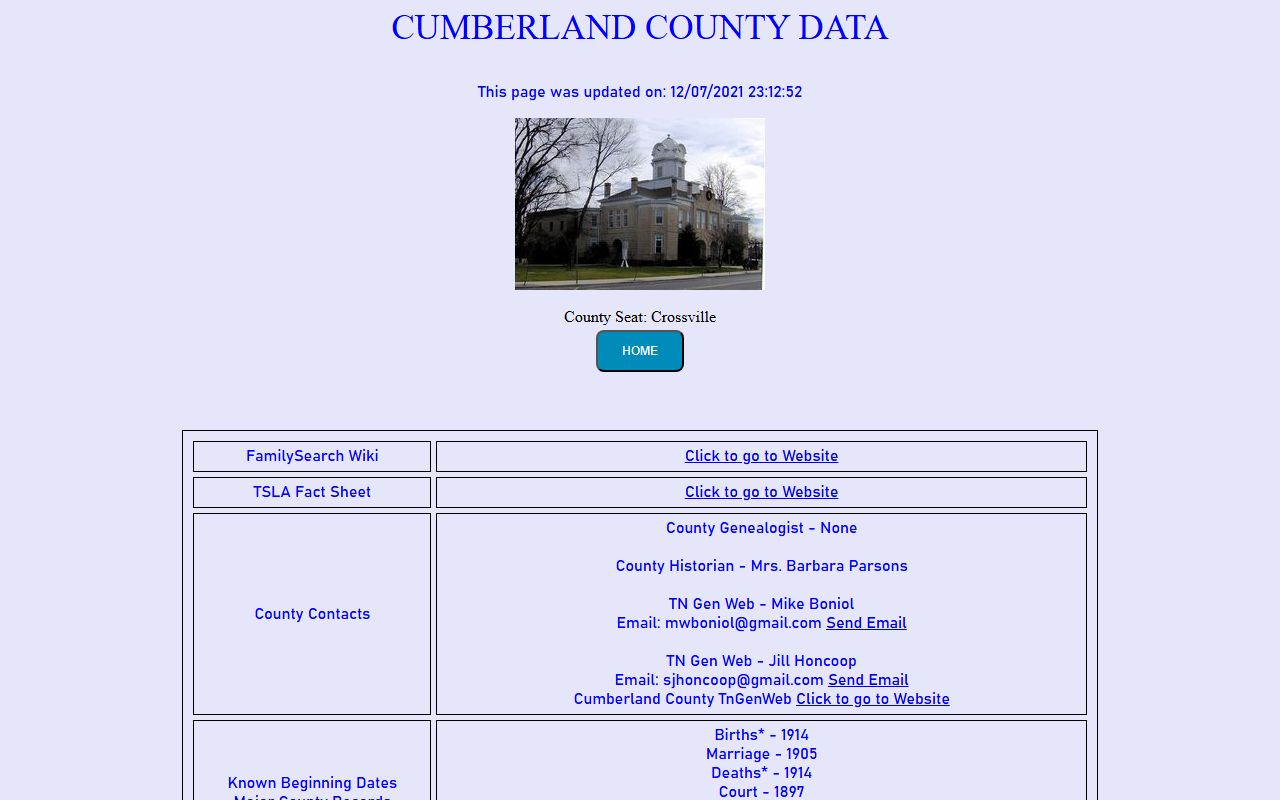
This image is useful when you want one county source that leads to a broader search. It keeps the focus on Cumberland County families and records.
Cumberland County Genealogy at TSLA
TSLA is the strongest statewide backup when Cumberland County genealogy research needs more depth. The Tennessee State Library and Archives holds local history material, county books, newspapers, manuscripts, and indexes that can fill in missing names and dates. That makes it a good next stop after the county page. If a record is too old for a web index, or if you need a family line that branches into another county, TSLA can give you a better view of the whole story.
Good statewide resources for Cumberland County families include TSLA, TeVA, Tennessee Office of Vital Records, FamilySearch Tennessee, TNGenWeb, and Tennessee Electronic Library. Each one adds a different kind of evidence. TSLA is strongest for older holdings. TeVA is good for digitized images. FamilySearch is strong for wide name searches. TEL helps when you need books or local studies.
The best use of these tools is simple. Start local, then widen the net. Cumberland County genealogy gets clearer when the county page and the state sources are used as one chain.
Cumberland County Genealogy Search Plan
Cumberland County research works best when you search in layers. First, use the county name and county seat. Then move into the neighboring counties. Finally, compare what the state tools show. That method keeps the search anchored in Crossville while still giving you room to catch families that crossed borders. It is a good fit for a county with so many neighbors.
The short plan below keeps the search tight and practical.
- Start with Crossville and the county name.
- Check the bordered counties for earlier records.
- Use deeds to follow land and kin.
- Search state indexes for matching dates.
- Keep surname spellings flexible.
Note: Cumberland County genealogy is easier to manage when you compare local office records with state repositories, because the same family often appears in more than one place.
Cumberland County Genealogy Links
Use the county pages first, then use the state repositories for wider searching. That gives you a clean path from local to state records without losing the Cumberland County focus.
For family history work, that simple path is often enough to uncover the next record.