
Search DeKalb County Genealogy
DeKalb County genealogy work often starts in Smithville, but the best results usually come from mixing county sources with state collections. The county was formed in 1837 from Cannon, Warren, and White counties, so older families may show up in records that cross those lines. If you are looking for a marriage, deed, probate item, or family clue, begin with the county clerk, then move to Tennessee archives and the DeKalb County TNGenWeb page. Small towns like Alexandria, Liberty, and Dowelltown can also guide a search when a family story has only a place name and a rough date.
DeKalb County Genealogy Sources
The county page at DeKalb County TNGenWeb is the fastest local starting point. It gives you a county frame, and it helps you see which names and places belong in the same search. For a wider net, the Tennessee State Library and Archives at sos.tn.gov/tsla holds state-level death indexes, family files, and county research aids that often help when a local trail is thin. The Tennessee Virtual Archive at teva.contentdm.oclc.org can also turn up maps, photos, and papers that point back to Smithville-area families.
DeKalb County has another useful clue in the Tennessee Genealogical Society county data page at tngs.org. Together the county page and the society data give you a good mix of local and statewide help. When you have a surname but no event date, work both ends at once. Check county clues, then match them to census years, marriage books, and later death records. That lets you bridge gaps without guessing at a family line.
The Tennessee Office of Vital Records at tn.gov is useful when you need later births, deaths, marriages, or divorces that fall into state custody. The FamilySearch Tennessee collection at familysearch.org can help with census, books, and digitized indexes. Smithville is the center of local access, so if a record is not online, that is where your next check should go. A short list is often enough to start.
Use the county seat, the county page, and the state tools together. That is the cleanest DeKalb County genealogy path.
- Full name and possible maiden name
- Approximate year for the event
- Town name or county seat clue
- Any known spouse, parent, or child name
- Book, deed, or probate reference if you already have one
DeKalb County Courthouse Records
The courthouse in Smithville is the main local stop for DeKalb County genealogy research. The county clerk is listed at (615) 597-5175, and the county seat keeps the records trail focused even when the family moved through several nearby towns. Since DeKalb County was created from Cannon, Warren, and White counties in 1837, older lines may need a county-to-county check. That is common in Middle Tennessee, where families used one road network and one church network, but land and probate books sat in different offices.
When you search the courthouse side of DeKalb County genealogy, start with deeds, marriages, probate, tax lists, and court minutes. Those books often point to the same names over and over. They also tell you when a family arrived, when it left, and who stayed near the same tract for years. If you only have a surname, the deed index can still help. If you only have a town, the marriage and probate books can still move you forward. That is why courthouse work matters. It can reveal the shape of a family even when one record is missing.
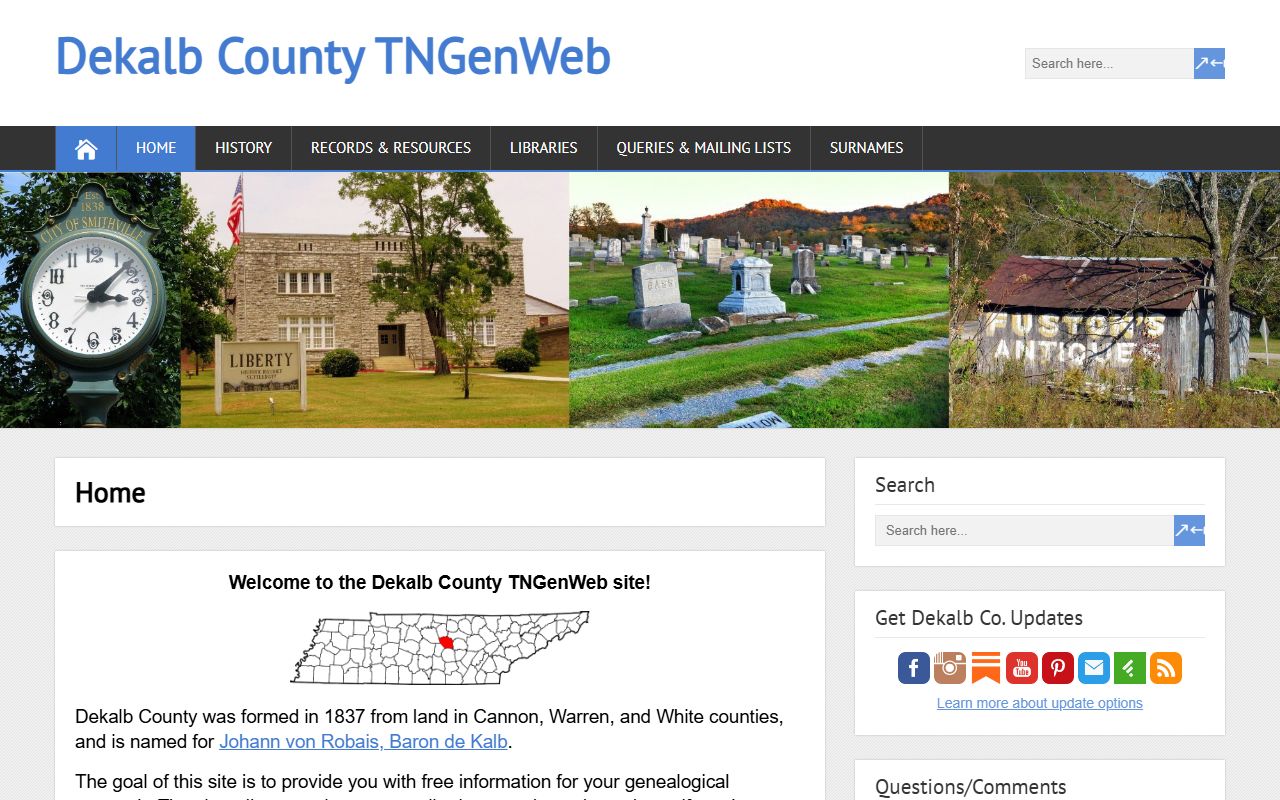
The county TNGenWeb page is worth a close look because it helps you line up county names, local places, and historical notes before you ask for copies. That matters in a county where a record may be in the clerk office, while a related clue sits in a state index. The image above points to the local DeKalb County genealogy page and gives you a quick path back to the source.
DeKalb County includes Smithville, Alexandria, Liberty, and Dowelltown. Those towns are useful tags in old deeds and church notes. They also help when a family moved within the county but kept the same surname. A move from one town to another can look small on a map and still change where the record lives. Keep the town name with the year. That habit saves work later.
If you need a county office answer, call before you drive. Ask whether the book you need is on site, whether the clerk can search by hand, and whether there is a copy fee. You will get farther with a short, clear ask than with a vague story. That is true for genealogy in DeKalb County and across Tennessee.
DeKalb County Genealogy History
DeKalb County genealogy also depends on the county story. The county was carved from older Middle Tennessee counties in 1837, and that means the first generations often moved in from nearby places. Some lines came in from Cannon, some from Warren, and some from White County. That kind of split makes research feel messy at first. It is not. It just means the family trail is wider than one courthouse. Once you know that, the path gets easier.
The county seat at Smithville keeps the local search focused, but the smaller towns matter too. Alexandria, Liberty, and Dowelltown can show up in church lists, school notes, and land descriptions. Those names help confirm that two records belong to the same family. They also help when a census line is hard to read. A town name can be the clue that makes a hard page make sense. Use that clue with care. Then compare it against the next record set.
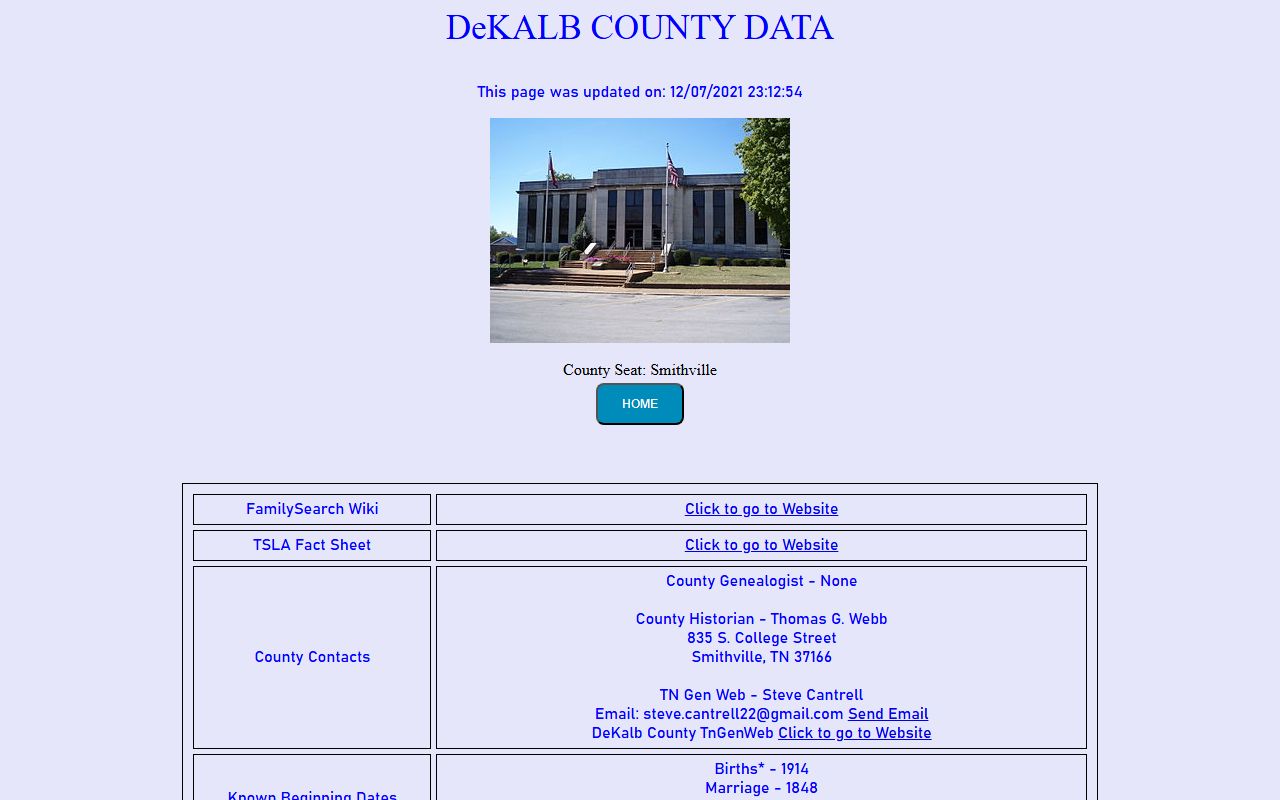
The Tennessee Genealogical Society county guide is a good match for this kind of work. It ties the county name to a deeper data set, which is helpful when the local trail is thin. The image above comes from that guide and gives you another path into DeKalb County genealogy sources. Use it as a second check, not as a replacement for the courthouse.
DeKalb County families often left a clean trail in later records even when early books were sparse. That means one death record, one marriage book entry, or one tax list can unlock a whole line. Keep looking at the same name across time. Watch for widows, sons, daughters, and land transfers. Those small links often carry the whole story.
Note: When one local record is weak, a second source from the same decade can still confirm the family and keep the line honest.
Finding More DeKalb County Records
State collections fill the gaps in DeKalb County genealogy. The Tennessee State Library and Archives at sos.tn.gov/tsla is the main place to check for death indexes, manuscript collections, and local history material. The Tennessee Virtual Archive at teva.contentdm.oclc.org can add photos and scanned items that point to the same families. The Tennessee Electronic Library gives residents access to research tools that support a deeper name search, especially when you need books or broad indexes.
The Tennessee Office of Vital Records at tn.gov can help with later certificates, while the FamilySearch Tennessee collection at familysearch.org can help you move from a name to a record type. The Tennessee Genealogical Society is also worth checking when you want organized family history help. None of these sources stand alone. They work best together, and they work best when you keep the county seat in mind.
For a practical search order, use the county name, then the town, then the year range. If that does not work, widen the net to the nearby counties that fed into DeKalb County in the first place. That is how you avoid dead ends. It also keeps you from forcing one record into the wrong family line.
DeKalb County genealogy searches are strongest when they stay simple. Start local. Add the state links. Keep every clue tied to a real place. Then move from one confirmed fact to the next until the line is stable.