
Find Dickson County Genealogy
Dickson County genealogy searches often begin in Charlotte, but the county’s record story is shaped by loss as much as by survival. The county was formed in 1803 from Robertson and Montgomery Counties, and the courthouse burned in 1865 during the Civil War. That fire matters. It means some early books are incomplete, so a smart search uses later records, state indexes, and nearby county clues to rebuild the line. Dickson County genealogy works best when you keep the fire date, the county seat, and the later books in one note. If you are tracing a family here, start with the county clerk, then widen the search to Tennessee archives and the county TNGenWeb page.
Dickson County Genealogy Sources
The local county page at Dickson County TNGenWeb is the best first stop for Dickson County genealogy. It gives a county map for your search and helps tie old places to the right time period. Dickson County genealogy also leans hard on state collections because the courthouse fire left gaps. That is where the Tennessee State Library and Archives comes in, along with its death indexes, manuscript collections, and county research tools.
The Tennessee Virtual Archive at teva.contentdm.oclc.org is useful when you want images, maps, or scanned papers that show the county in context. The Tennessee Office of Vital Records at tn.gov helps with later certificates, while the Tennessee Electronic Library at tntel.info can help you search books and databases that support a family line. Use the county page and the state sites together. That mix is what makes Dickson County genealogy practical.
The Dickson County courthouse is at 1 Court Square in Charlotte, and the county clerk is listed at (615) 789-4171. If you need a book check or a copy request, ask the office what they can see on site before you drive in. That saves time and keeps Dickson County genealogy tied to the right office.
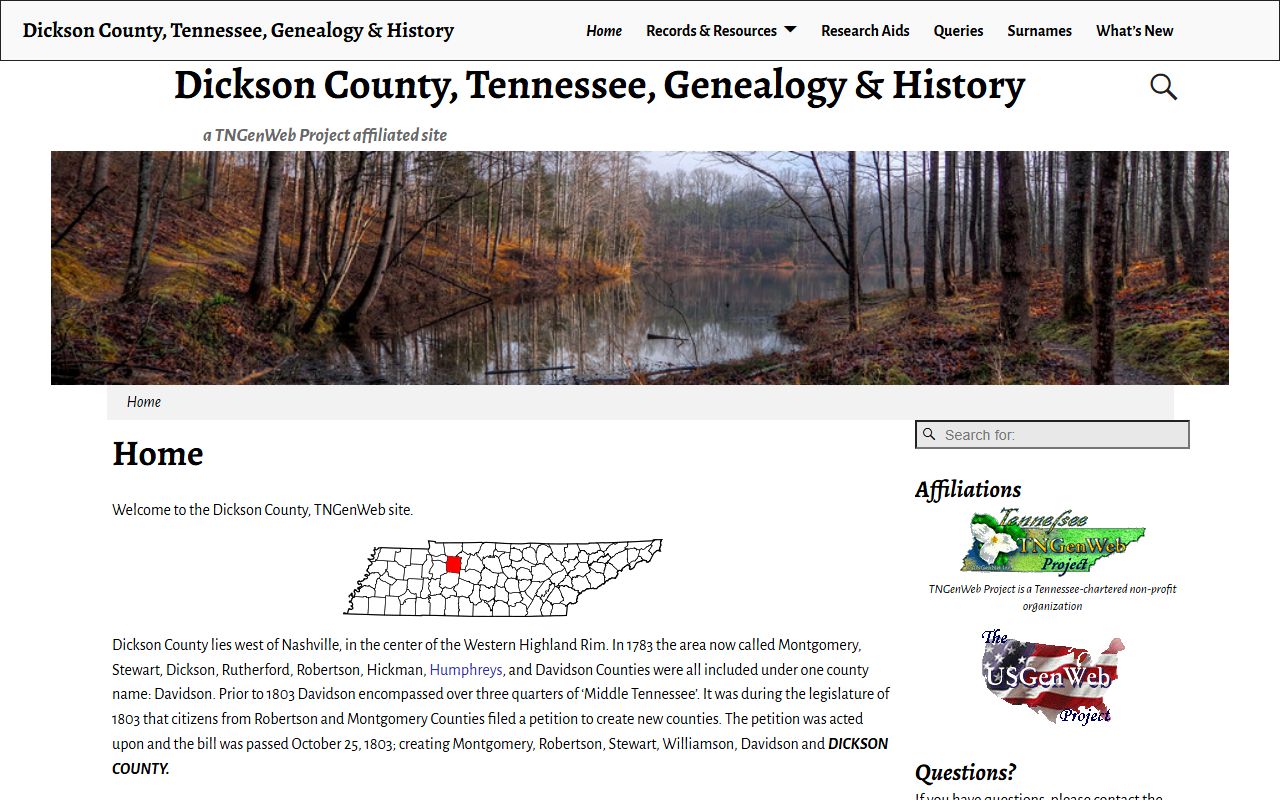
The image above links back to the Dickson County TNGenWeb page. It is a good visual cue for the county’s local research space, and it keeps Dickson County genealogy tied to a local source when the courthouse books are thin.
One more useful habit is to keep a clean list of names, years, and places. The county fire makes that list more important, not less. When a book is missing, the next record often comes from a cousin, a neighbor, or a later deed.
Dickson County Courthouse Records
Dickson County genealogy is built around the courthouse record trail. The county seat is Charlotte, and the courthouse books are still the core local source. The record start dates in the research file tell you a lot about where to begin. Birth records start in 1908, marriage records in 1868, death records in 1909, census coverage reaches back to 1820, land starts in 1808, and probate starts in 1866.
If you have an early family, start with land and census. If you have a later family, start with birth, marriage, and death records. The land books often show who lived near the same tract for years. The marriage books connect spouses and surnames. Probate records name heirs, and that mix is useful in Dickson County genealogy after the 1865 fire.
The Dickson County courthouse has a clear address, 1 Court Square, Charlotte, TN 37036, and the county clerk number is (615) 789-4171. Keep that on hand. A short call can tell you if a book is on site, whether the clerk can do a search, and whether there is a copy fee. That is often enough to turn a vague lead into a real record order.
Records that deserve first attention include:
- Marriage books and marriage licenses
- Deed books and land indexes
- Probate packets and wills
- Tax lists and court minutes
- Later birth and death records
Note: When Dickson County books are incomplete, a later record from the same family can still confirm the older line.
Dickson County Genealogy History
The county story matters in Dickson County genealogy. The courthouse fire in 1865 is the biggest line in the research, but the county’s 1803 creation from Robertson and Montgomery Counties matters too. Older roots may sit in an earlier county book, not in a Dickson volume. A good search follows the family, not just the county line.
Charlotte is the county seat, and that gives you a place anchor when names are common. Keep Charlotte in the notes and keep the county name beside it. That simple habit helps when you need to sort the right line from a long list of neighbors, especially after a courthouse fire.

The image above comes from the Tennessee TNGenWeb state page at tngenweb.org. It is a state-level fallback that helps when Dickson County records need a wider frame and keeps Dickson County genealogy tied to a larger Tennessee network.
Search around the gap, not just through it. If a pre-1865 record is missing, look for a marriage entry, a deed, a probate note, or a later death record that restates the family ties.
Finding More Dickson County Records
When the county books do not give you enough, move outward. The Tennessee State Library and Archives can help with local history material and statewide indexes. The Tennessee Virtual Archive is worth checking for maps and scanned material, and the Tennessee Office of Vital Records adds later certificates.
Dickson County genealogy works best when you treat the fire as a clue, not a dead end. The loss explains why some books are missing, but it does not end the search. Use census, land, probate, and marriage records in that order if you need to rebuild a family track across the county line.
A clear order helps. Start with Charlotte, then check the county clerk, then use TSLA and the county page. If the first pass fails, move to state collections and later records. That pattern keeps Dickson County genealogy focused and local.
Dickson County genealogy also benefits from a clean notebook. Keep Charlotte, the fire date, and the decade you need in one line. That makes it easier to compare a later deed, a marriage entry, or a probate note when the earlier books are thin. The same notebook also helps when you need to sort a neighbor from a kin line.