
Find Dyer County Genealogy
Dyer County genealogy research starts in Dyersburg, but the county’s best clues often come from movement across the West Tennessee line. The county was founded in 1823, and the courthouse stands in a region where families moved between Dyer, Crockett, Gibson, Lake, Lauderdale, and Obion counties. That border pattern matters. A deed, a marriage, or a later death record may sit just one county away. Dyer County genealogy rewards a slow search because the same family can move across a county line and still stay in the same story. Dyersburg still gives the county work its center. If you are tracing a Dyer County line, start with the county page, then use state archives and neighboring counties to close the gap.
Dyer County Genealogy Sources
The county TNGenWeb page at Dyer County TNGenWeb is the best local starting point for Dyer County genealogy. It gives you a place-based frame for the family line, and it keeps the county name tied to real local research. Dyer County genealogy also benefits from the Tennessee Genealogical Society county data page at tngs.org. Together, they give you a clear county start before you move to the state records.
State tools fill in the rest. The Tennessee State Library and Archives at sos.tn.gov/tsla helps with death indexes and old county materials. The Tennessee Virtual Archive at teva.contentdm.oclc.org can bring up maps and scanned items, and the Tennessee Office of Vital Records at tn.gov is the place to check for later certificates. Those sources often show the same family in a different year or a different book.
Dyersburg is the county seat, and the courthouse address is 1 W. Court St., Dyersburg, TN 38024. The county clerk number is (731) 286-7814. That office is the place to confirm what books are on hand and whether a record can be pulled by staff.
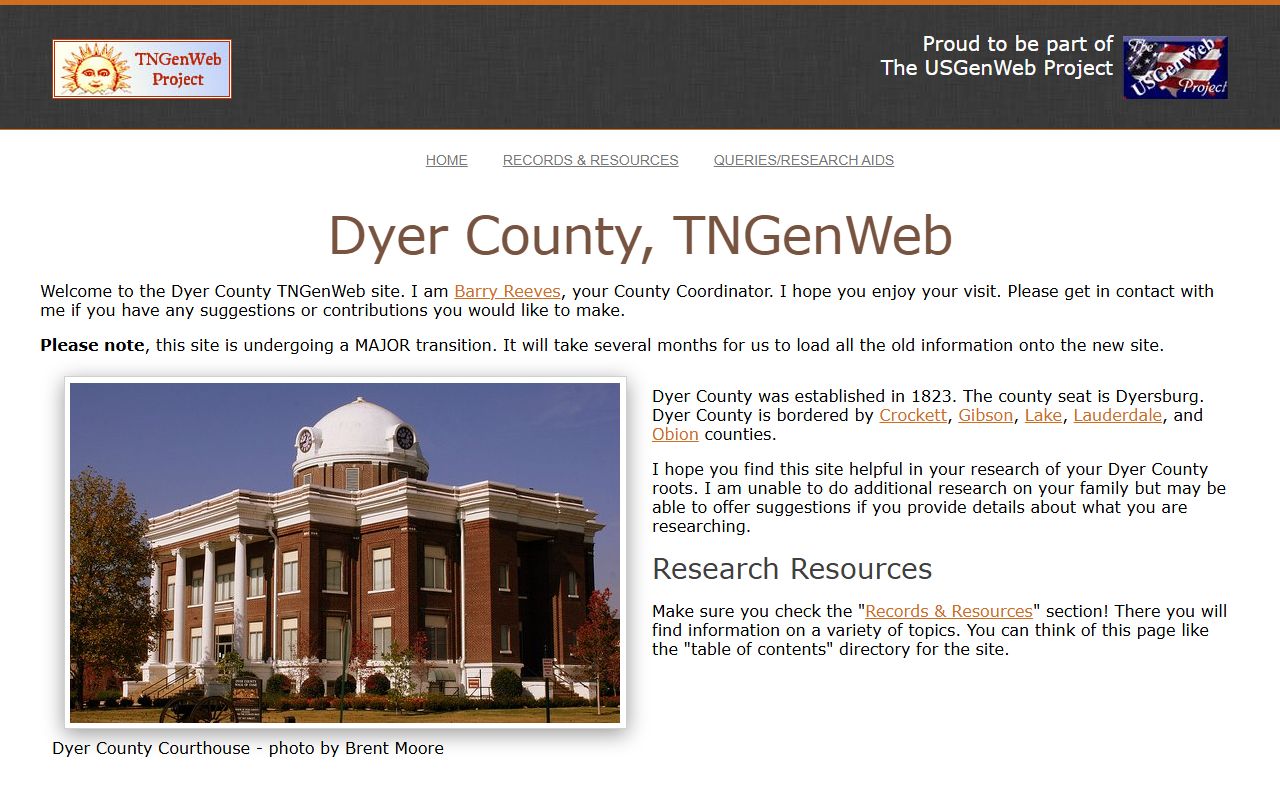
The image above points to the Dyer County TNGenWeb page. That local page is a practical way to keep your search grounded, and it gives Dyer County genealogy one more quick path back to the county source.
If you have only a surname, do not stop at one site. Check the county page, then move to TSLA and the state records. That sequence often turns a weak clue into a usable record trail.
Dyer County Courthouse Records
Dyer County genealogy depends on the courthouse as much as any West Tennessee county does. The county clerk keeps the local trail in Dyersburg, and the record set gives you a broad view of how families settled and moved. The county is bordered by Crockett, Gibson, Lake, Lauderdale, and Obion counties, so border research is part of the job here. That border work is often the difference between a dead end and a useful lead.
When you search the courthouse books, start with deeds, marriages, probate, and later death records. Dyer County does not give a detailed record-start list in the short research note, so the safe move is to work each book type as a clue source rather than assuming one book holds the whole story. Deeds can show land neighbors, marriages can confirm spouses, and probate can identify heirs.
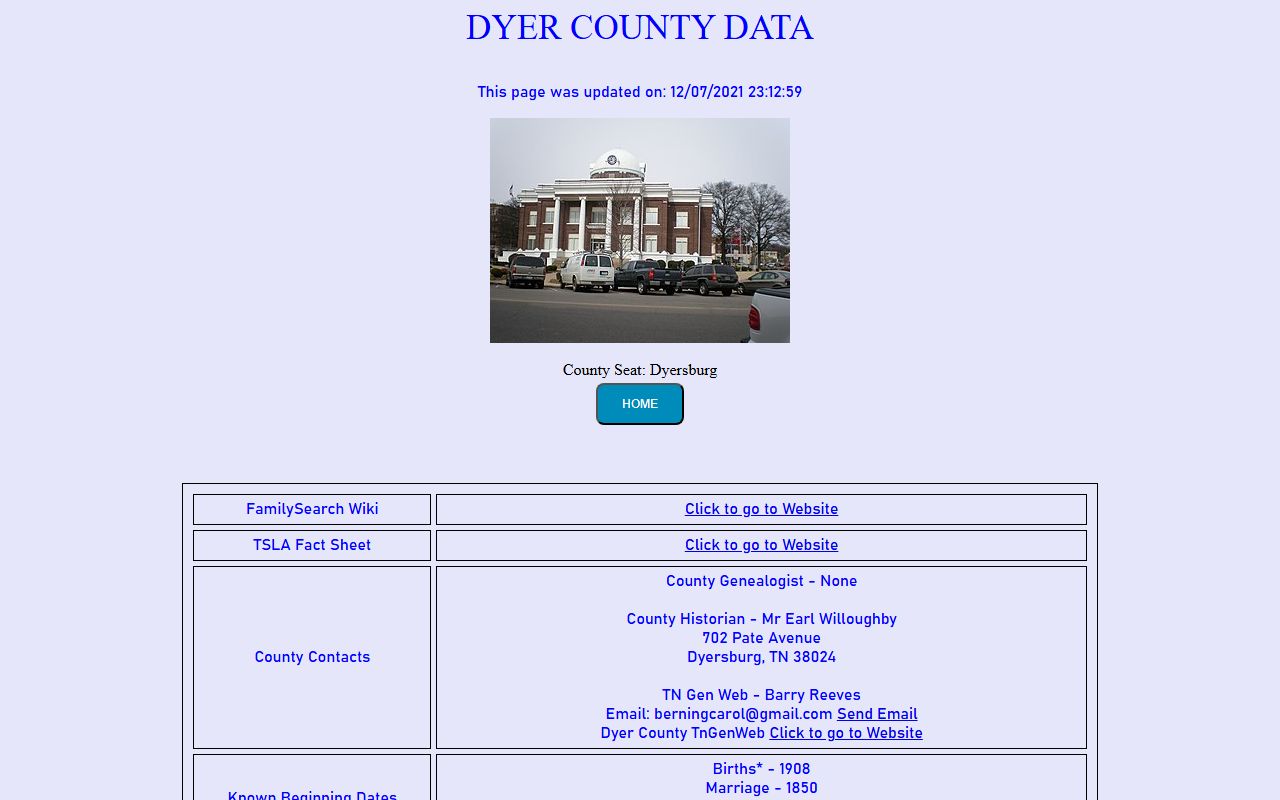
The Tennessee Genealogical Society county data page at tngs.org/resources is another useful local image source and research guide. It gives Dyer County genealogy work a second channel when the courthouse search turns up a gap.
Dyersburg is the anchor town, but the border counties matter just as much. Keep a list of nearby counties when you search. That list helps when a family appears in one place in 1880 and in another place in 1900.
Note: In border counties, the missing piece is often not gone. It is just filed next door.
Dyer County Genealogy History
Dyer County genealogy makes more sense when you keep the county’s border position in mind. The county was founded in 1823, and it sits in a region where people moved for land, kin, and work. That movement shows up in records and in Dyersburg, where one county line often leads to another.
The county seat at Dyersburg gives you the main office, but the county story is wider than one town. A surname in Dyer County often needs a border check in Crockett, Gibson, Lake, Lauderdale, or Obion. That is part of the county method, not a detour.
Use the Tennessee Virtual Archive at teva.contentdm.oclc.org when you want maps or images that show how the county grew. Use the Tennessee Electronic Library and FamilySearch Tennessee when a name needs a second search path.
When the trail is messy, keep the county seat, the border counties, and the surname in one note. Then work forward by decade. That is a plain method, but it works for Dyer County genealogy.
Finding More Dyer County Records
When Dyer County genealogy research needs more depth, move to the state level. The Tennessee State Library and Archives is the main state stop, and it gives you a path to historical records, manuscript holdings, and indexes that can support county work.
The Tennessee Office of Vital Records helps with later certificates, and the Tennessee Genealogical Society gives another way to track county history and local record guides. Use the county page first, then the clerk in Dyersburg, then the state archives when you need a wider frame.
Dyer County genealogy is strongest when the search stays tied to place. Keep Dyersburg, the border counties, and the known year in front of you. Then add the state sites one by one. A straight path beats a wide one every time. Dyer County genealogy usually rewards one careful county, then one careful neighbor.
Border work in Dyer County genealogy often takes patience. A surname can jump from one county book to the next, and the same person may show up as a witness, buyer, or heir in a different place. Track each role in the same note so the trail stays clear.
That method helps when a family split time between Dyersburg and a nearby county. It also helps when the record book you need is indexed under a spelling you did not expect. Small notes keep the search from drifting.