
Fayette County Genealogy Records
Fayette County genealogy research centers on Somerville, but the county’s history reaches across a wide farm and plantation landscape. The county was founded in 1824, and the research file notes its role as a major cotton-producing region with a plantation economy. That matters for family history because land, probate, marriage, and tax records can carry the strongest clues. Fayette County genealogy works best when you keep land, place, and family together on the page. If you are tracing a Fayette County line, begin with the county clerk, then use state collections and the county TNGS page to sort the names, places, and time periods that belong together.
Fayette County Genealogy Sources
The county data page at Fayette County TNGS Data is the strongest local link in the research set. It gives Fayette County genealogy work a fast path into county-level clues. Since Fayette County does not have a TNGenWeb link in the source list, the Tennessee Genealogical Society page is especially helpful. It keeps the county name tied to a real research path.
State resources fill the gaps. The Tennessee State Library and Archives at sos.tn.gov/tsla is the core repository for Tennessee genealogy work, and the Tennessee Virtual Archive at teva.contentdm.oclc.org can turn up maps, photos, and scans that show where Fayette County families lived. The Tennessee Office of Vital Records at tn.gov helps with later certificates, and the Tennessee Electronic Library at tntel.info supports book and database research.
The Fayette County courthouse is at 16755 Highway 59, Somerville, TN 38068, and the county clerk is listed at (901) 465-5213. If you are planning a visit, call first. Ask whether the book you need is on site and whether staff can point you to the right office.
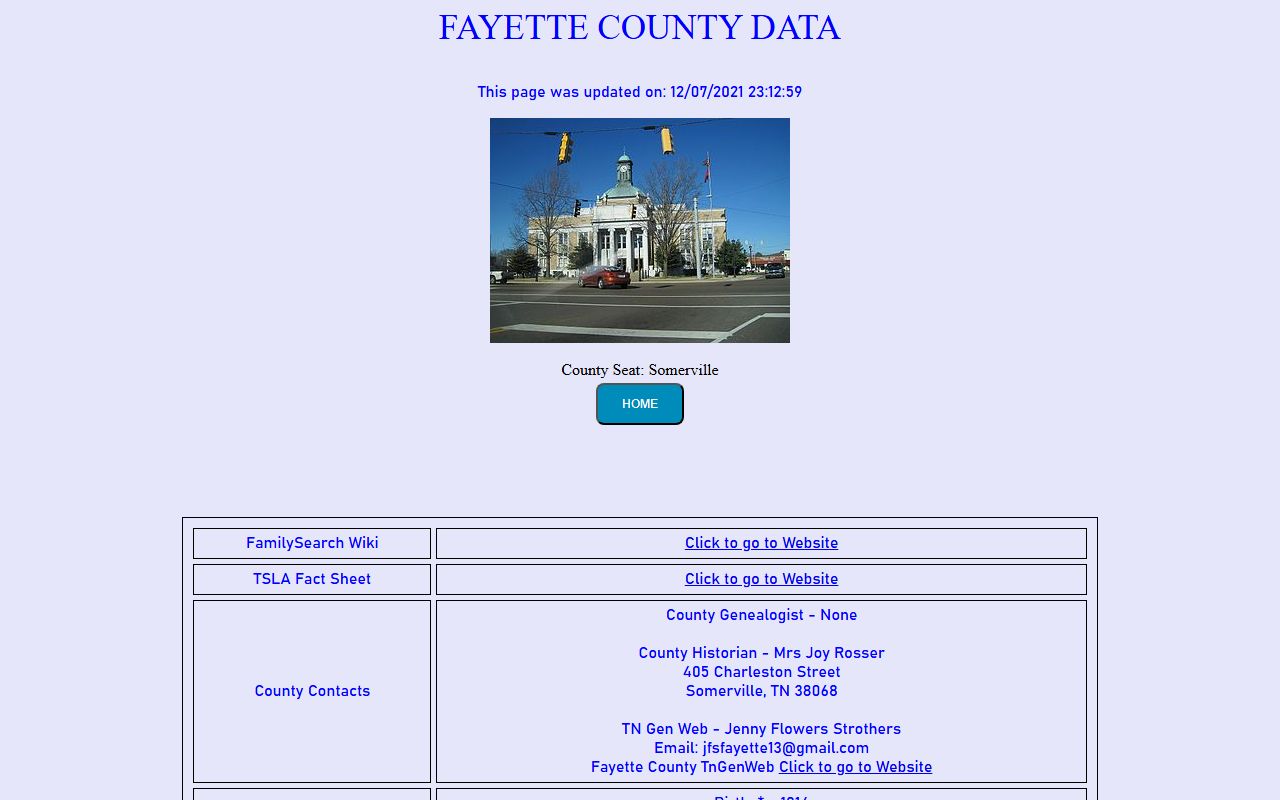
The image above points to the Fayette County TNGS Data page. That link is a useful local starting point, and it keeps Fayette County genealogy tied to a real county source.
The communities listed in the research file, including Braden, Gallaway, Grand Junction, La Grange, Macon, Moscow, Oakland, Piperton, Rossville, Somerville, and Williston, are worth keeping in your notes. A town name can help separate two families with the same surname.
Fayette County Courthouse Records
Fayette County genealogy leans heavily on the courthouse because the county’s land and family history grew side by side. The county seat is Somerville, and the clerk office there is the first stop for local records. Land books, probate files, marriage records, and court minutes can show how families passed property, married into neighboring lines, and moved through the county. That is especially useful in a county with a plantation economy, because the same surnames can appear again and again in the same place over time.
Fayette County does not have a courthouse fire note in the short research summary, so the safer approach is to treat the courthouse as a living source and to compare it with state collections. Look for deeds first if you know the family owned land. Look for marriages if you know the surname but not the spouse. Look for probate if you know the family stayed in the county for a long run. These books often answer different parts of the same question.
Somerville is the county seat, and the courthouse address is 16755 Highway 59, Somerville, TN 38068. The county clerk phone is (901) 465-5213. Those details matter when you need to order a copy or ask for a hand search. County office staff can often tell you whether a book is on hand, whether a record is indexed, and whether you should start with a deed or a probate file.
Useful record types in Fayette County genealogy include:
- Deed books and land indexes
- Marriage records and marriage licenses
- Probate files and estate papers
- Tax lists and court minutes
- Later birth, death, and divorce records
Note: In a farming county, land and probate records often explain more than a census line does.
Fayette County Genealogy History
Fayette County genealogy needs the county story as much as the county books. The research file calls Fayette County a major cotton-producing region with a plantation economy. That tells you that land ownership, estate work, and family ties may show up in the records with more weight than a simple one-year event.
Somerville anchors the county, but the communities matter too. Braden, Gallaway, Grand Junction, La Grange, Macon, Moscow, Oakland, Piperton, Rossville, Williston, and Somerville itself can all show up in family notes and local references. Keep those places together in your notes.

The image above is the Tennessee State Library and Archives page at sos.tn.gov/tsla. It is a state fallback that gives Fayette County genealogy work a firm base when local clues are scattered.
When families stayed in one place for a long time, a small set of records can tell a lot. A deed can place a man on a tract. A marriage can identify a spouse. A probate file can name heirs, and together they can show a whole Fayette County line.
Finding More Fayette County Records
Use the state tools when Fayette County genealogy hits a wall. The Tennessee Virtual Archive at teva.contentdm.oclc.org can add maps and historic images. The Tennessee Office of Vital Records at tn.gov handles later certificates.
FamilySearch Tennessee and the Tennessee Electronic Library offer another way to search indexed material and books that support a family search. Start with the county clerk in Somerville and the TNGS county page, then move to TSLA and the state vital records office.
Fayette County genealogy is strongest when the search keeps land, family, and place in the same line of thought. The county has a rich record base, so use it in pieces and the family pattern will come into view. Somerville, the smaller towns, and the land books often work as one set of clues in Fayette County genealogy.
A deed can point to a tract, a marriage can point to a spouse, and a probate file can tie both to the same family group. That is why the county feels local even when the records spread across years, and why Fayette County genealogy rewards a careful county-first search.