
Franklin County Genealogy Research
Franklin County genealogy research usually starts in Winchester, where the county clerk and courthouse still shape most family history searches. Records tied to marriages, deeds, court minutes, and older estate files can point a researcher to a parent, spouse, or next home. The county was formed in 1807, so it sits in the early statehood period when many lines began to settle more deeply in Middle Tennessee. Use local records first, then widen the net with Tennessee archives, county history notes, and index tools that can turn a name into a useful trail.
Franklin County Genealogy Overview
Franklin County is built around Winchester, but the county reaches well beyond the seat. Cowan, Decherd, Estill Springs, Huntland, Alto, Salem, Gum Creek, Oak Grove, Belvidere, Owl Hollow, and Wilder's Chapel all belong in a broad family search. Each place can hide a clue in a deed, a cemetery note, a school list, or a church memory. That matters when a family moved in short hops across the hills and hollows of the county.
Genealogy work in Franklin County is often a mix of direct record lookup and local pattern reading. A marriage can confirm a maiden name. A land book can show a shift from one tract to another. A court reference may point to a guardian, an heir, or a neighbor who knew the family. The more you move between record types, the more likely you are to see the same people appear in several roles. That is the sort of trail that turns a name into a family line.
County-level work is strongest when you keep your questions narrow. Start with one surname, one town, or one time span. Then match what you find in the county seat with state-level indexes and local history notes. Franklin County has enough structure to reward a careful search, and the county name itself shows up in a lot of Tennessee research routes, so it is worth checking more than one source before you stop.
Where to Find Franklin County Records
The Franklin County Courthouse is at 1 S. Jefferson St., Winchester, TN 37398. The county clerk can be reached at (931) 967-2926. That office is a key stop for anyone who wants to ask about county records, copies, or the best way to locate a file that is not already online. Courthouse work still matters here, because the clerk can often tell you which book, index, or file series should be checked first.
For genealogy, that means starting with whatever your family story already gives you. If you have a town, use it. If you only have a surname, ask for the book range that matches the time period. If you know a marriage or land transfer, ask for that specific entry. Courthouse staff can move faster when the request is tight. They can also help you narrow the search when a family used several spellings in the same generation.
When a county record is not sitting in the courthouse file room, the Tennessee State Library and Archives is the next strong stop. TSLA holds statewide death indexes, census microfilm, and many local history items that can help fill gaps. That is useful in Franklin County because family lines often show up in more than one state collection. The Office of Vital Records is also useful when you need later certificates rather than older local books.
Franklin County Genealogy on the Web
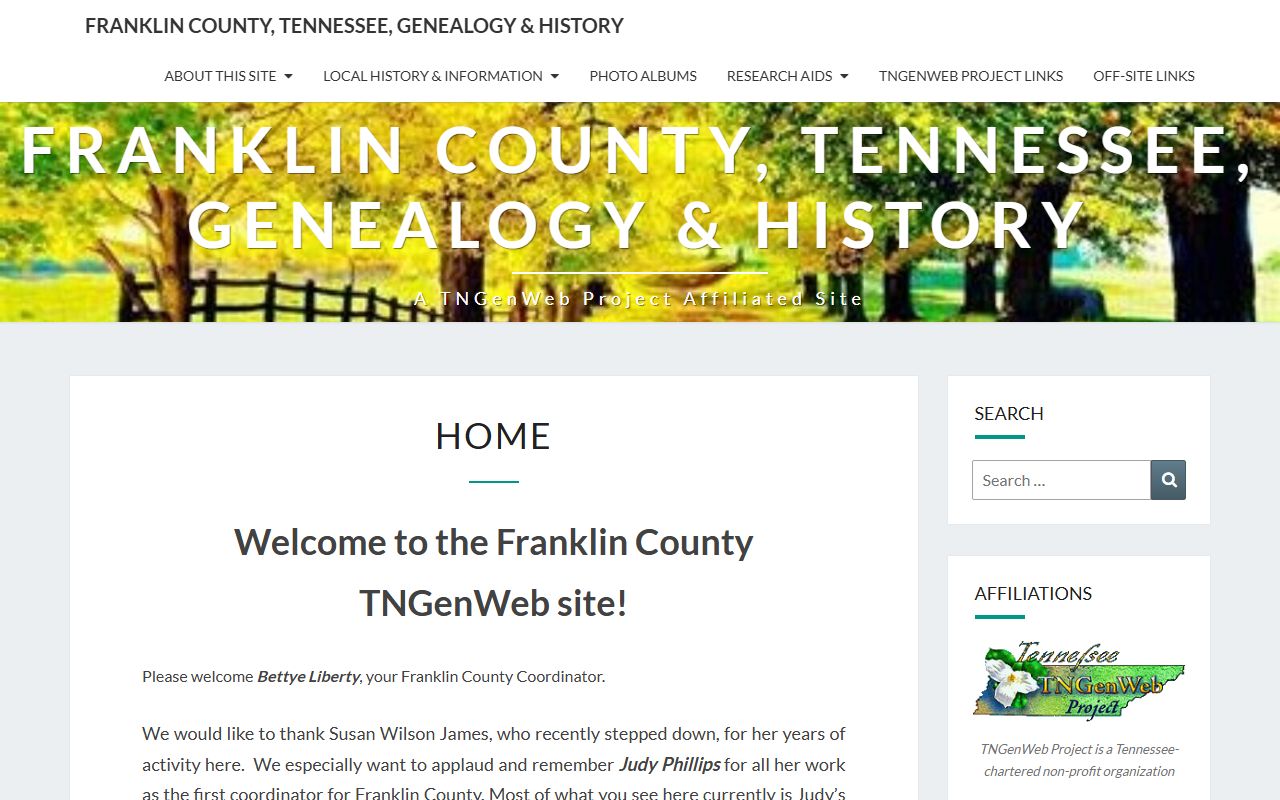
The local county page at tngenweb.org/franklin is a solid first web stop for Franklin County genealogy. It is built for local family research, and it points back to a county context that fits the records you will see in Winchester. The county coordinator listed in the research is Bettye Liberty, which is another sign that this page is meant to stay local and useful rather than broad and vague.
Another useful online source is the Franklin County TNGS data page at tngs.org. That page gives a more research-driven angle and can help you connect surnames, dates, and county references. It is the kind of tool that pays off when you already have a family name but need a better way to sort the line or identify the right time span.
Use that page with county books and cemetery notes, since the best match often comes from lining up the same surname in more than one place. Franklin County genealogy works best when local notes and surname tools stay close together.
The Franklin County TNGenWeb page and the TNGS data page make a good pair because they support different parts of the same task. Together they give you a better chance of seeing the same family in more than one record set.
State Genealogy Sources
State resources matter when Franklin County research runs thin or a family branch moves across county lines. The Tennessee State Library and Archives at sos.tn.gov/tsla offers death indexes, census microfilm, manuscripts, county records, and a strong reading room in Nashville. The Tennessee Virtual Archive at teva.contentdm.oclc.org adds digitized photos, newspapers, maps, and local history pieces.
The Tennessee Office of Vital Records at tn.gov is the place to go for later birth, death, marriage, and divorce certificates. That is useful when a line runs past the older county books and you need a certified record instead of a transcript.

The state archive image gives Franklin County genealogy a firm fallback when local clues are scattered. The Tennessee state page at FamilySearch and the free Tennessee library portal at tntel.info both help after the county books have narrowed the search.
That wider view often helps when a Franklin County family appears in a county book one year and a state index the next.
Franklin County Towns and Family Clues
Franklin County genealogy work gets better when you keep the smaller places in mind. A family may not stay in Winchester alone. They may show up in Cowan, Decherd, Estill Springs, Huntland, or one of the smaller communities that sit between those towns. Those places can explain why a deed, burial, or marriage record seems to move in steps instead of in a straight line.
It also helps to read each clue in the context of local movement. A child born in one place may be married in another. A land sale may link two neighbors who later appear as witnesses on a marriage bond. In a county like Franklin, that sort of chain is common. It rewards slow work and a careful eye.
When you build a Franklin County family profile, try to connect the place, the date, and the record type each time. A marriage record can point to a maiden name. A deed can point to a father or son. A court note can point to an heir or guardian. Together, they make the county's history useful to the family tree.
For a simple first pass, start with the county seat, then move out to the surrounding towns and the state tools. That keeps the search local without missing the bigger Tennessee record trail.