
Search Gibson County Genealogy
Gibson County genealogy research usually starts in Trenton, but Gibson County genealogy also reaches back to the Chickasaw Cession and the first seat at Gibsonport. That shift matters because Gibson County genealogy records can show the county in more than one place and under more than one local pattern. A good Gibson County genealogy search begins with the courthouse, then moves to the county web page, then widens to Tennessee archives and state indexes. In Gibson County genealogy, a small land clue or a marriage note can open a much larger family story.
Gibson County Genealogy Overview
Gibson County was founded in 1823, and its county seat is Trenton. Gibson County genealogy work benefits from that early seat change because Gibsonport became Trenton in 1826, and older papers do not always use the same place name as later books. That helps when you are sorting deeds, family stories, and county history notes that point to the same line in slightly different language.
The county borders Carroll, Crockett, Dyer, Madison, Obion, and Weakley counties. That border pattern matters for Gibson County genealogy because families did not always stay put. A marriage or land transfer may appear in one county while a burial, census entry, or probate note sits in another. Tracing the border counties can keep a Gibson County genealogy line from going stale too soon.
Use the county seat, the old seat name, and the border map together. Those three pieces can tell you where to look next. They also help when a Gibson County family shows up in a later generation with a different town name or a land reference that crosses a county line.
Where to Find Gibson County Records
The Gibson County Courthouse is at 204 N. Court St., Trenton, TN 38382, and the county clerk can be reached at (731) 855-7615. That office is a core stop for anyone asking about Gibson County genealogy records, copies, or the right route into a county file. If you know a name and an approximate year, the clerk office can often help you narrow the request before you waste time on the wrong book.
County work is strongest when the request is specific. Ask for a marriage entry if you have a spouse name. Ask for a deed if you know a land tract. Ask for a court book if you are working from a probate or guardian clue. Gibson County genealogy often makes more sense when you follow the record type rather than a broad family search.
When the courthouse record is not enough, move out to state collections. TSLA can help with older indexes and manuscript material, while the Tennessee Office of Vital Records handles later certificates. That is useful in Gibson County genealogy because a family may appear in a local record book first and then in a state certificate later in the line.
Gibson County Genealogy on the Web
The Gibson County government site at gibsoncountytn.com gives the live office path for Gibson County genealogy. Use it when you need current contacts, office names, or a quick reset before you return to the older record trail.  That county site helps when you need the current office before you chase the older Gibson County genealogy line.
The Gibson County TNGenWeb page at tngenweb.org/gibson keeps the local history side in view. It gives Gibson County genealogy a county frame and helps you stay with family clues instead of generic county data. 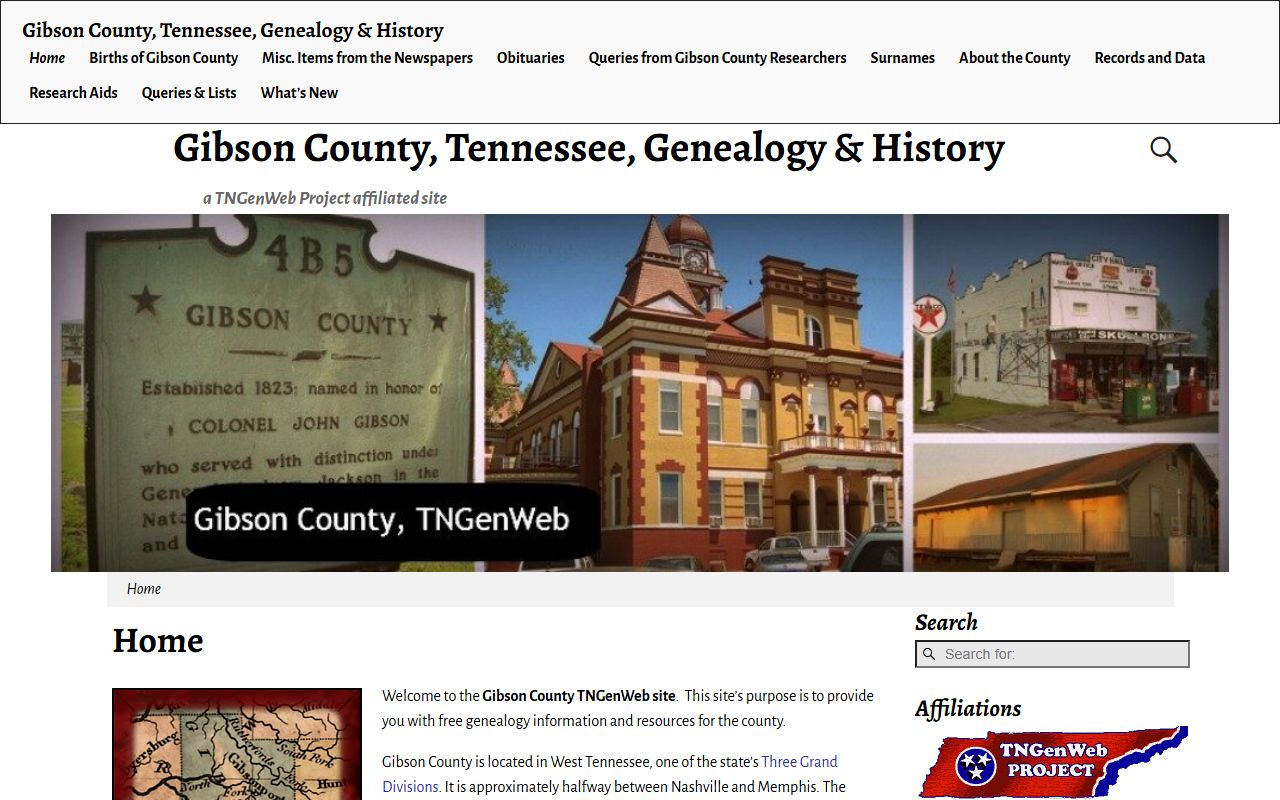 This county project page keeps the search tied to Gibson County family history.
The Gibson County TNGS data page at tngs.org adds another surname layer for Gibson County genealogy. It is useful when names repeat across branches. 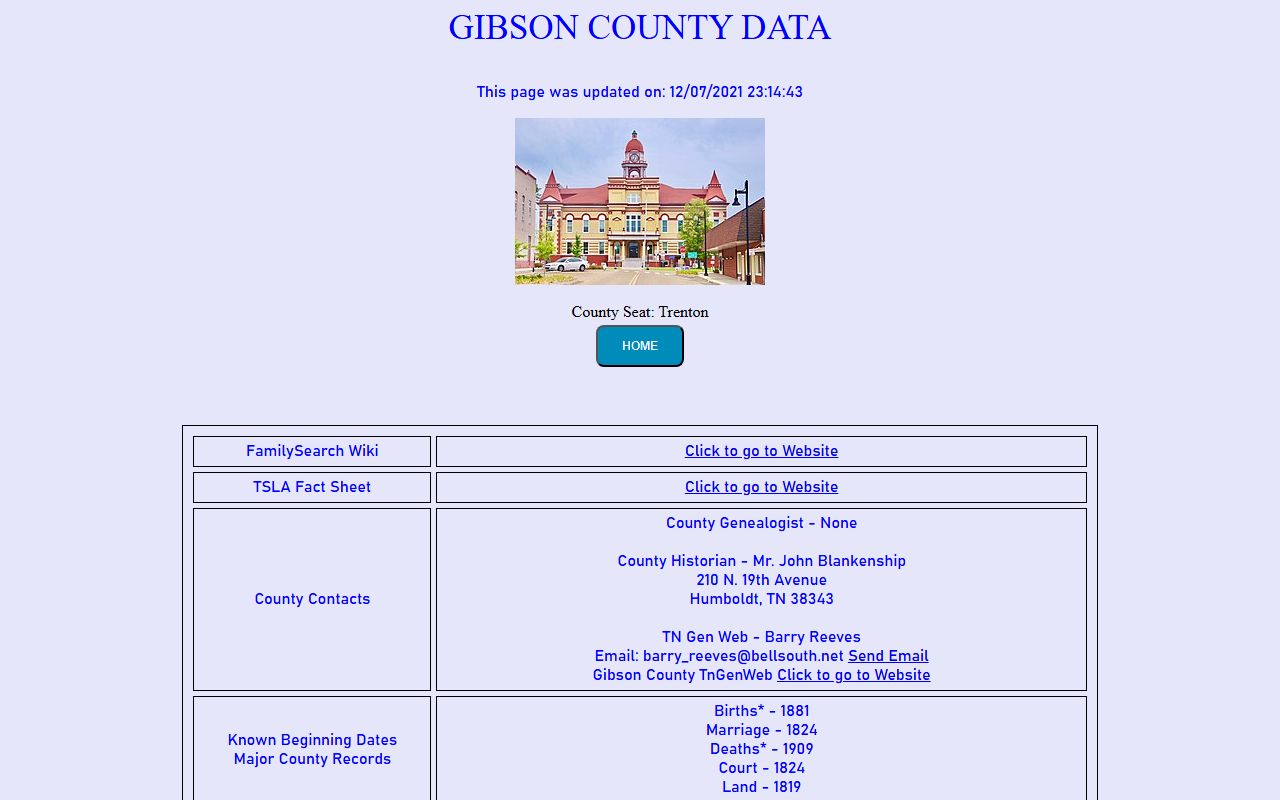 That page sharpens the county search and keeps the research tied to Tennessee family history work.
State Genealogy Sources
State sources are important in Gibson County because they help bridge the gap between local books and later certificates. TSLA at sos.tn.gov/tsla offers statewide death indexes, census microfilm, manuscript collections, and local history materials. The Tennessee Virtual Archive at teva.contentdm.oclc.org adds digitized maps, photos, and newspapers that can place a Gibson County family in a more exact time and place. 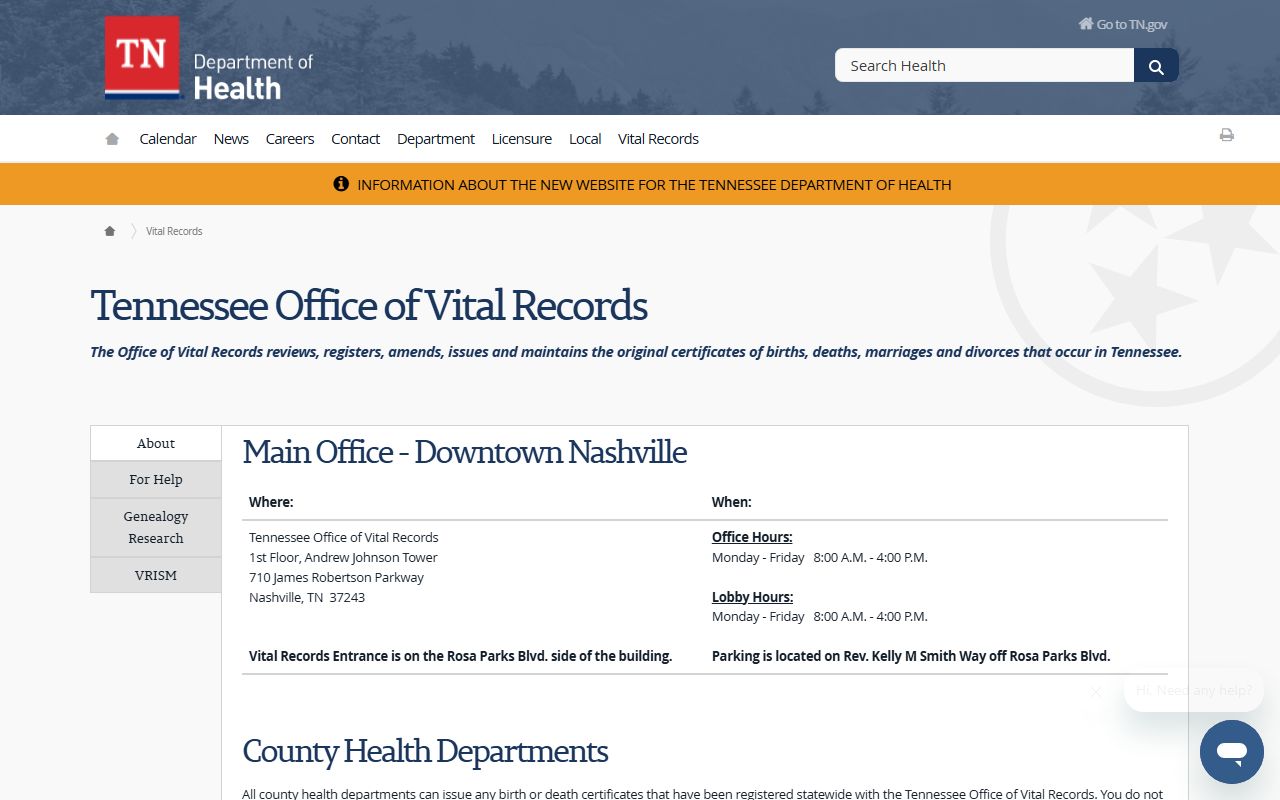 That state image gives Gibson County genealogy a wider Tennessee frame.
The Tennessee Office of Vital Records at tn.gov is the place for later birth, marriage, death, and divorce certificates. That is useful when the family line moves past the older county books and needs a certified state record. FamilySearch can also help when you want more search options without leaving home, and the Tennessee library portal is another plain-language search path for Gibson County genealogy.
The Tennessee Genealogical Society gives Gibson County researchers another research path, especially when surname work needs cross-checking. Together, these sources make a good second pass after you have checked the courthouse and the county web pages. Gibson County genealogy often moves faster when the state record and the county record sit side by side.
Gibson County Border Clues
Border counties matter in Gibson County genealogy because the lines around Trenton touch several other counties. Carroll, Crockett, Dyer, Madison, Obion, and Weakley can all matter when a family appears to vanish in one book and reappear in another. A move across a county line is not a lost record. It is often the clue that tells you where to look next.
That is why a Gibson County family profile should keep track of towns, neighbors, and witnesses. A marriage bond may link to a nearby county. A deed may mention a road or creek that runs into the next county. A census line may show a household that uses a different local naming pattern from the courthouse book. Those are small things, but they matter.
Use the county seat, the old Gibsonport note, and the county border list together. That gives you a better sense of how the family moved through the area. It also helps when you need to choose between two possible county offices for the same surname.