
Greene County Genealogy Records
Greene County genealogy research has a deep local history and a strong place in Tennessee's early story. The county was founded in 1783 from Washington County, and the research notes point to its role as the capital of the State of Franklin from 1784 to 1788. That matters because early county history often leaves records in more than one place and under more than one political name. If you are tracing a Greene County family, you are working in a county that sat close to major early settlement routes and a lot of early East Tennessee change.
Greene County Genealogy Overview
The county seat is Greeneville, and the courthouse is at 101 S. Main St., Greeneville, TN 37743. The county clerk can be reached at (423) 798-1708. That makes Greeneville the main place to start when you want courthouse records, local copies, or a better sense of how the county paper trail is organized. Early county history often shows up in land, court, and family records that still matter to modern researchers.
Greene County also carries a strong historical marker because the region was part of the Washington District of North Carolina and later the State of Franklin. That gives the county a wider frame than many later Tennessee counties. A family line can show up in early local history, then later in a county file, and then again in a state index. If you keep those shifts in mind, the records make more sense.
Genealogy work here should keep an eye on local politics, migration, and community memory. Greene County families often left traces in courthouse books, old history notes, and county project pages. Those smaller traces are often enough to move from a name to a line of descent.
Where to Find Greene County Records
The courthouse is still the key office for Greene County records. If you want deeds, court entries, marriage references, or another county file, start with the county clerk and the courthouse address. Bring a narrow time frame if you can. Greene County is old enough that many family lines stretch over a wide date range, and a tight question is easier to answer than a broad one.
Early county history can also help explain why a record is hard to place. Greene County was established in 1783, and the Washington District history means some families moved through the area before Tennessee statehood. That is useful when you are trying to decide whether a family belongs in the early county books or in a later settlement pattern. In a county this old, context is part of the search.
If the courthouse does not have what you need on hand, turn to TSLA and the county web page. Those two sources often carry the local history note or index clue that lets you locate the record faster. In Greene County, a careful search plan saves time because the family trail can spread across several generations of early books.
Greene County Genealogy on the Web
The Greene County TNGenWeb page at tngenweb.org/greenetn is the county's most direct local genealogy page in the research. It ties the county to a local project framework and helps researchers stay focused on Greene County names and places. The coordinator listed in the research is Elizabeth Swanay O'Neal, which is another sign that the page is meant to be a living Greene County genealogy tool.
That local page matters because early Greene County history can be hard to read if you only use statewide tools. A county project page helps you see which surnames, settlements, and local notes belong to Greene County first. Then you can compare that with courthouse entries and state records. In a county with Franklin State history, that sequence is especially useful.
The Greene County TNGenWeb page at the county genealogy site is the clearest local web starting point for Greene County genealogy.
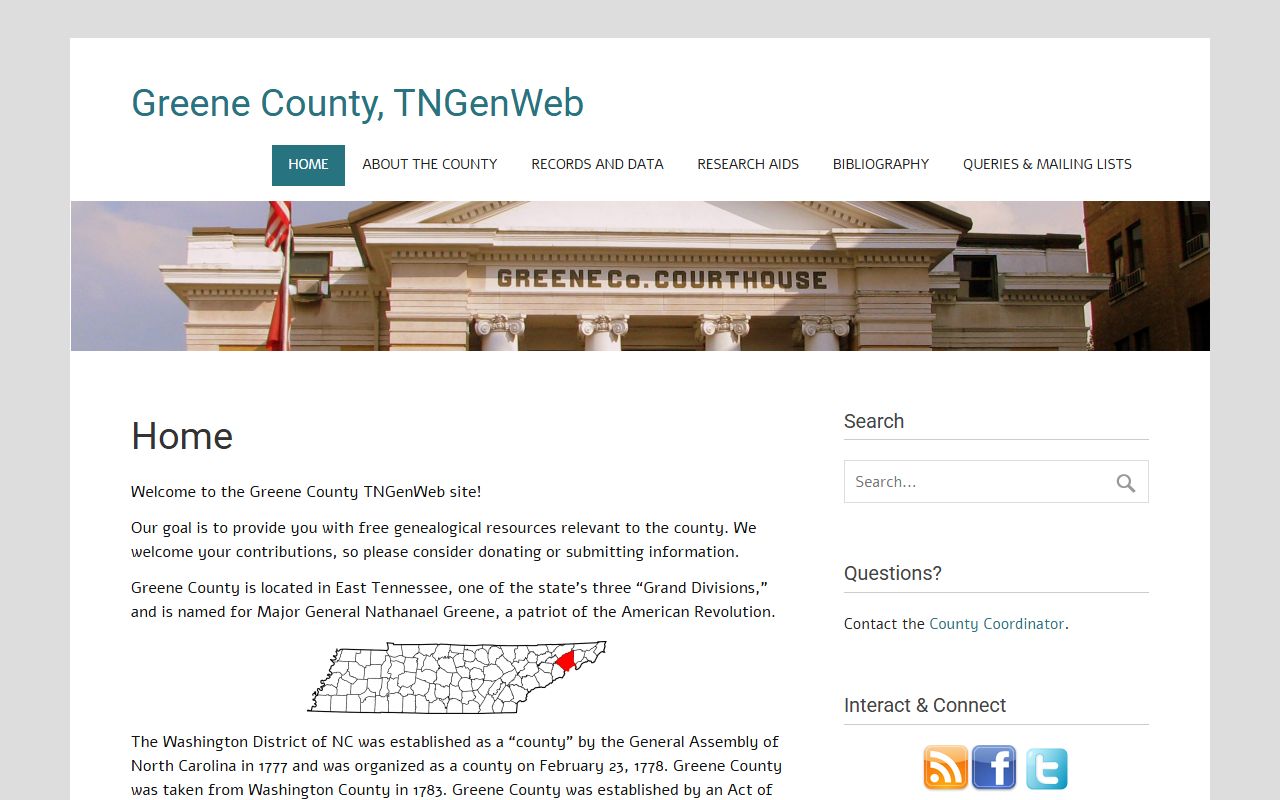
It is a good first stop when you want the county in front of you before you move into courthouse or state records. The Tennessee State Library and Archives at sos.tn.gov/tsla gives Greene County researchers a deeper archive base when the county page is not enough.

That kind of state support is useful when early Greene County families are spread across several record types and several layers of Greene County genealogy.
State Genealogy Sources
Greene County research benefits from the same statewide sources that support the rest of Tennessee. TSLA at sos.tn.gov/tsla gives death indexes, census microfilm, manuscripts, and county history material. The Tennessee Virtual Archive at teva.contentdm.oclc.org adds digitized newspapers, maps, and images that can show a Greene County family in context. That is useful when you need a place-based clue rather than just a name.
The Tennessee Office of Vital Records at tn.gov handles later certificates for births, marriages, deaths, and divorces. FamilySearch at familysearch.org and the Tennessee Electronic Library at tntel.info are also good if you need free search tools and broad access to Tennessee record paths. The Tennessee Genealogical Society at tngs.org can help if you want another county-level research layer or a surname lead that is easier to sort than a raw courthouse index.
Greene County has enough history that cross-checking is worth the time. Greene County's place in the State of Franklin makes TeVA a useful source for early maps and digitized local material.
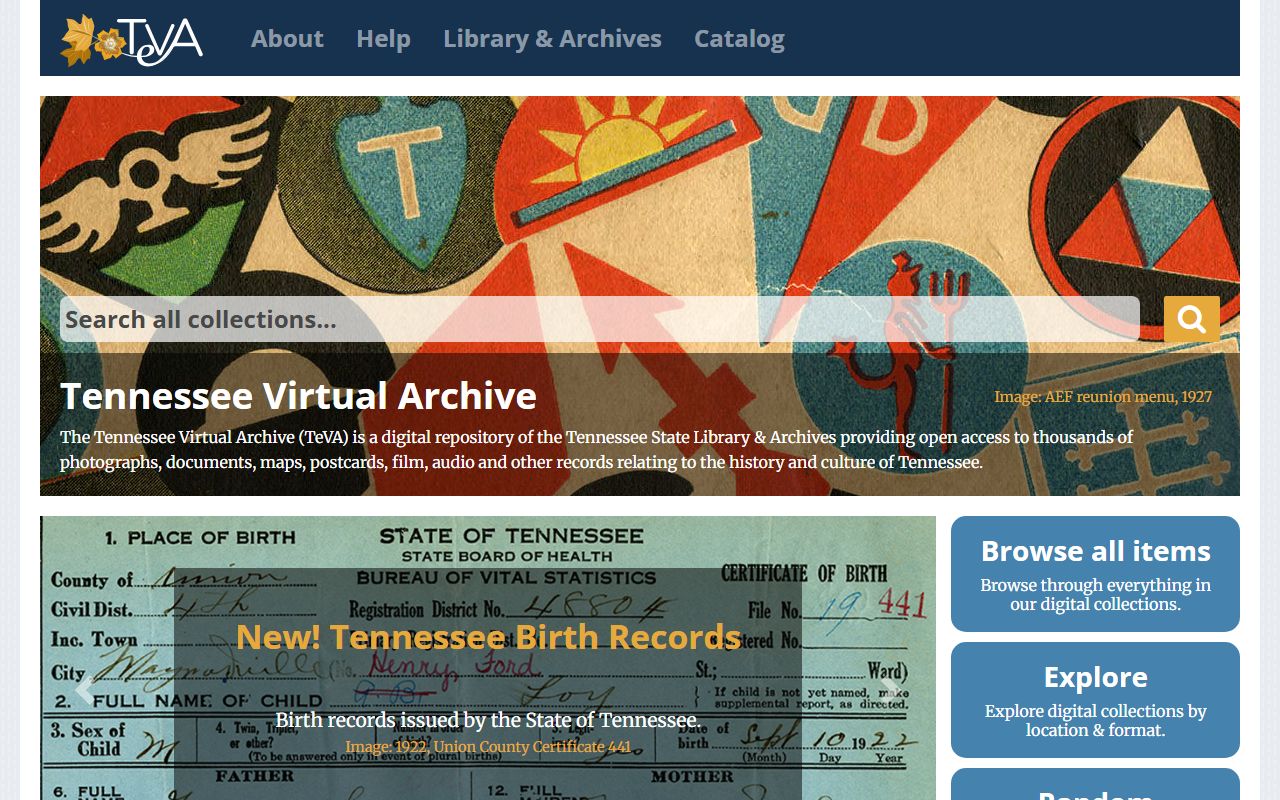
That helps when an early Greene County line needs history as much as it needs a record image, which is common in Greene County genealogy.
Greene County History Clues
Greene County is one of the places where history and genealogy overlap in a strong way. The county was part of the Washington District and later the State of Franklin, so old family stories may mention local political names that do not fit a modern county map. That is not a problem. It is a clue. It tells you to keep looking in early record groups and local history collections.
Families in Greene County can appear in courthouse books, church memory, and local project pages with slightly different spellings or place names. When that happens, do not assume the line is lost. It may only mean the family moved through an early period when the record system itself was changing. That is common in older East Tennessee counties.
For Greene County, the best habit is to pair local and state sources. Start with the county clerk and TNGenWeb. Then check TSLA and the state archive tools. That sequence will usually give you a stronger and cleaner family trail.