
Find Hancock County Genealogy
Hancock County genealogy takes a different path than many Tennessee counties because the research marks it as a burned county with few early records available. Hancock County was formed in 1844 from Hawkins and Claiborne counties, and the county seat is Sneedville. That mix means you often need to piece a family line together from scattered deeds, chancery material, census references, and state-level support. Start local, but expect to use parent counties and Tennessee archives to rebuild the early years.
Hancock County Genealogy Sources
The county-level source in the research is the Hancock County TNGenWeb page. That page is the best local doorway into Hancock County genealogy because it keeps the county name, place history, and local research frame together. The research also gives the Hancock County Courthouse at 1 Court St., Sneedville, TN 37869, with the County Clerk phone number at (423) 733-2511. Those are the practical office details to keep close at hand.
Hancock County genealogy is shaped by loss. Early records are thin, and the first census listed in the research is 1850. Deeds begin in 1879, chancery court minutes begin in August 1870, and scattered chancery cases survive from 1797 to 1930. That means the county can still help, but the search often has to be built from several record types instead of one complete series. A burned county takes a wider search plan.
Because the county is known for Melungeon heritage on Newman's Ridge, a Hancock County search often needs patience and several record lines. That is normal here. It is part of the county’s research character.
Hancock County Genealogy and Courthouse
The Sneedville courthouse is the local anchor for Hancock County genealogy. The research places it at 1 Court St., Sneedville, TN 37869, and names the County Clerk at (423) 733-2511. That office can help you confirm what survives, what books are open, and what kind of request you should make. For a county with limited early material, direct office contact matters a great deal. A short conversation can save a lot of dead ends.
The county was formed from Hawkins and Claiborne counties, so the best search often reaches back into those older places. If a family appears to vanish in Hancock County, it may only mean the record lives in a parent county, a church set, or a state repository. A burned county rarely tells the whole story by itself.
Use the courthouse for the current county path, then widen the search with the older county lines and Tennessee collections.
Hancock County Genealogy Records
The research says Hancock County genealogy records are limited but still useful. Deeds begin in 1879. Chancery Court minutes start in August 1870. The county has census material from 1850 through 1930, and scattered chancery court cases survive from 1797 to 1930. That combination is enough to build a family story, but it takes careful work. No one record type is enough on its own.
Hancock County TNGS Data and Hancock County TNGenWeb are the county-specific manifest and research links for this page. They serve as the local image and local link anchors. For a county where the early record base is thin, those local markers help keep the search centered on the right county while you move into state repositories for support.
- Use the Sneedville courthouse for current county contacts.
- Check deed and chancery records first.
- Work back through Hawkins and Claiborne counties.
- Use census material to bridge missing years.
- Keep Melungeon and Newman's Ridge references in mind.
That is the most practical way to handle a county with burned records and scattered early files.
Hancock County Genealogy Images
This county image comes from Hancock County TNGenWeb and gives the page a local county research anchor.
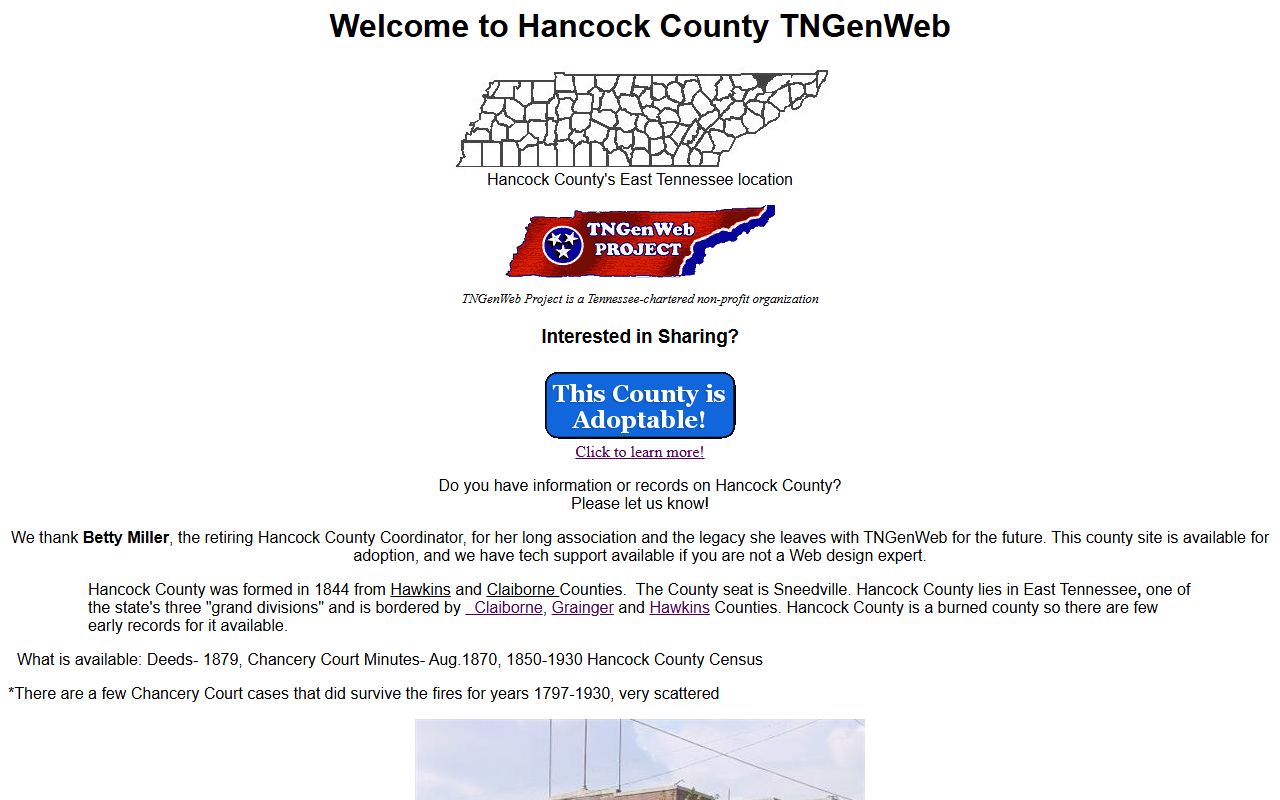
The image keeps the focus on Hancock County and its local genealogy trail. This second image comes from Hancock County TNGS Data and gives a second genealogy-specific view.
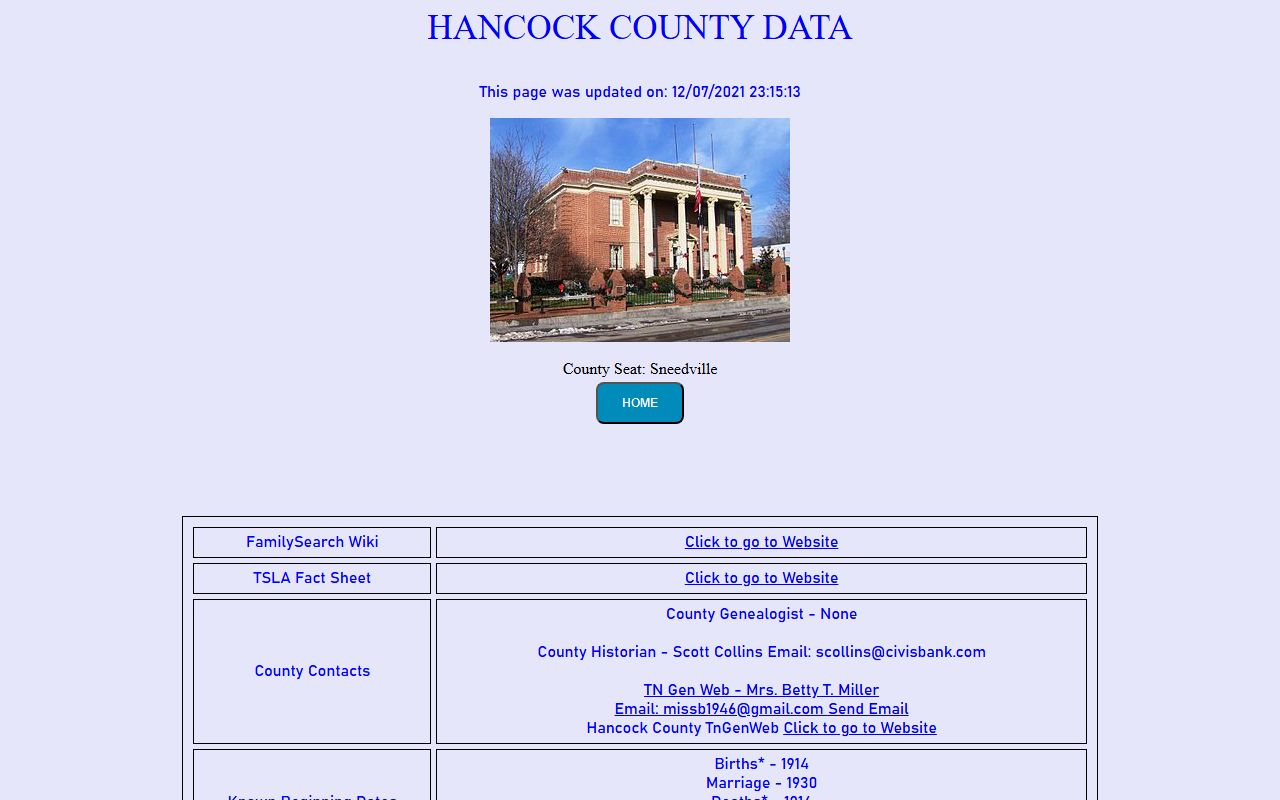
It is a useful visual companion for a county where early records are limited and context matters.
Hancock County Genealogy at State Repositories
State repositories are essential for Hancock County genealogy. TSLA can supply county books, archival references, and county-era records that survive outside the courthouse. TeVA can help with digitized images and documents. FamilySearch Tennessee is another broad support tool, especially when you need indexes that reach across county lines. For a burned county, those sources are not optional. They are part of the basic search plan.
TNGenWeb and the Tennessee Genealogical Society are useful too. They keep Hancock County genealogy connected to local names, historical notes, and Tennessee research practices. When the local record base is thin, the state and society collections can supply the missing structure.
Use the state level to rebuild the county line one piece at a time.
Hancock County Genealogy Search Tips
Keep the county’s burned-record status in mind at every step. Hancock County genealogy often begins with a surname, a census note, or a later deed, then works backward through parent counties and state material. That takes time, but it is the right method. The county does not have a thick early record set, so the search works best when you use every small clue and hold the dates close.
Slow work is better than wrong work here.
Note: Hancock County genealogy is strongest when you combine the Sneedville courthouse, the parent counties, and Tennessee repositories instead of searching each source on its own.
Hancock County Genealogy Links
Start with the county page, then add the TNGS data page and TSLA. If the trail still needs more support, use TeVA, FamilySearch Tennessee, and Tennessee Vital Records. Those sources fit the burned-county reality and keep the search anchored in Tennessee.