
Search Obion County Genealogy
Obion County Genealogy often starts in Union City, but it does not stop there. Families moved between the county seat, Troy, and the wider river country, so the best searches mix courthouse leads, local history clues, and state records. The county has a clear Tennessee Genealogy trail through its TNGenWeb page, county government, and regional archives. If you know one name, one town, or one old family farm, you can build a useful path from land, marriage, probate, and cemetery sources without having to guess where to begin.
Obion County Genealogy Quick Facts
Obion County Genealogy Sources
Start Obion County Genealogy work with the county seat story. Union City is the current county seat, while Troy was the first. That change matters because older papers, book references, and family notes may point to a seat name that no longer matches the modern courthouse. The county is linked to Obion County TNGenWeb, which is the best first stop for county context, volunteer leads, and local family notes. For a county with limited published office detail in the research, that kind of local index can save hours.
Obion County records work best when you think in layers. Deed books help with land moves. Marriage records help connect households. Probate papers help track heirs and old family names. Cemetery lists and local history pages help you see where the family cluster lived. That mix gives Tennessee Genealogy researchers a way to move from a rough surname to a map of where that surname sat in the county.
See also the county government at obioncountytn.gov for a modern county reference point. Even when the office pages are short, the government site helps confirm the county seat and directs you toward county services. The county clerk phone number in the research is (731) 885-3831, which is useful when you need to ask which office handles a specific book or copy request.
Obion County Genealogy research also benefits from state-level Tennessee tools. The Tennessee State Library and Archives can supply death indexes, county microfilm, and manuscript material. The Tennessee Virtual Archive adds digitized images and records. Together they fill gaps when a county page gives only a seat name and a county link.
Use the county seat, the old seat name, and the family surname together. That simple method often turns one clue into three usable records in Obion County Genealogy work.
Obion County Genealogy at Union City
The county image below comes from Obion County Government. It is a good visual reminder that modern county research still begins with the local seat and the office network behind it.
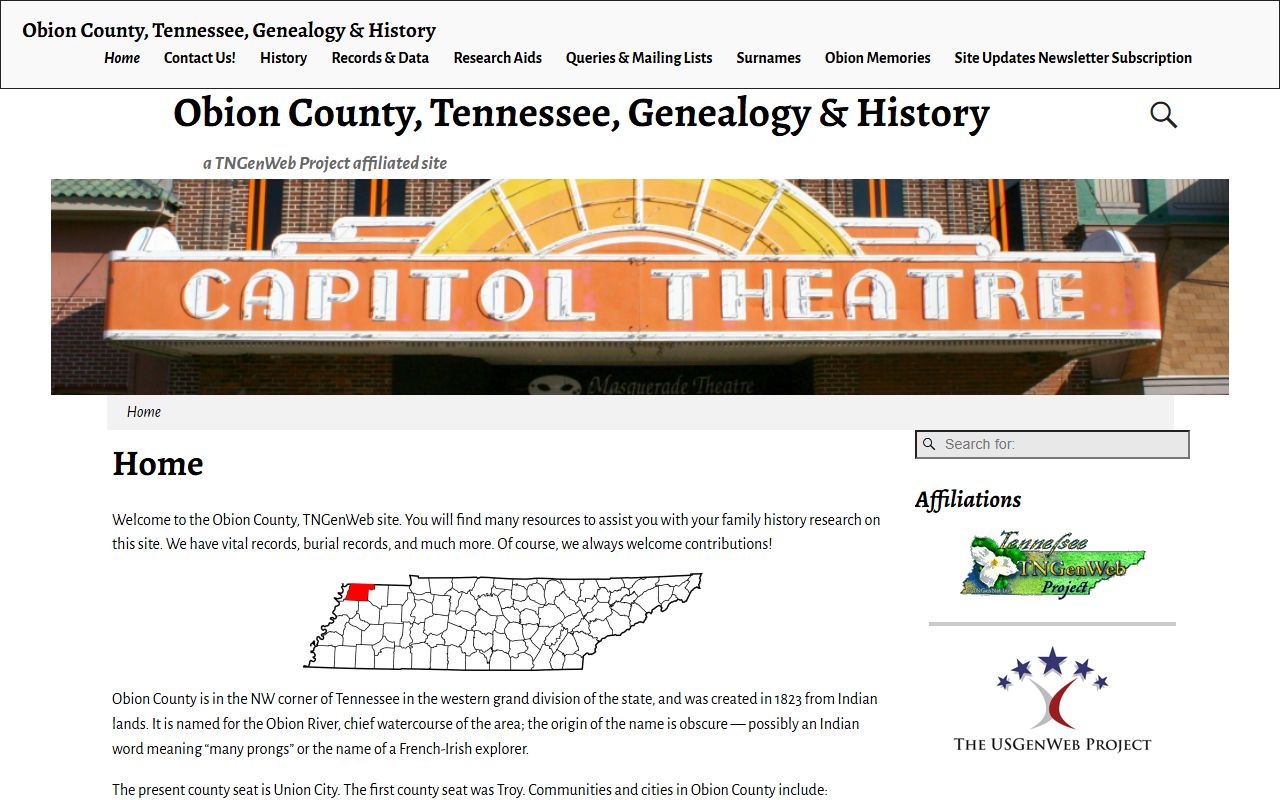
That image pairs well with the county government site and the Obion County TNGenWeb page. Both help you keep the research tied to place, which is the core of Tennessee Genealogy work.
Union City is the place to start for current county operations, but older family work may lead back to Troy. That switch matters for deed references, courthouse notes, and records copied from older books. If a family lived along the county lines, the same surname may show up in nearby counties as well, so local and state sources should be checked side by side.
When you search Obion County Genealogy, write down every place name you find. Small clues can be enough. A road name, school name, or church note can point to a family cluster and help you match one generation to the next.
Obion County Genealogy and State Records
State records matter when Obion County books are thin or when a family line moves out of the county. Tennessee Genealogy researchers should use the TSLA homepage at sos.tn.gov/tsla for archive holdings, county microfilm, and reference help. TSLA often fills the gap between a local county clue and a surviving image or index. That is useful when the research points to an older marriage, death, or family file that was copied long ago.
The FamilySearch Tennessee records portal is another good statewide tool. It helps you search beyond Obion County and compare names, dates, and places across the state. When a record is not in the county office, FamilySearch can still show you the shape of the family trail.
The TNGenWeb state page also helps because it links county projects across Tennessee. For Obion County Genealogy, that matters when you need local cemetery notes, volunteer transcriptions, or family pages that never made it into a county database. Use it as a guide, then verify with the courthouse or archive source named in the lead.
Tennessee Vital Records at tn.gov/health/health-program-areas/vital-records.html gives you a modern path for certificates when the event falls into statewide coverage. It will not replace county books, but it can confirm a line before you move back into local Obion County sources.
In Obion County Genealogy work, the state records are the bridge. The county records are the proof.
Obion County Genealogy Search Tips
Search names in more than one form. Use initials, maiden names, and spelling variants. County records were not always indexed the same way, and older books can be hard to read. That is why Obion County Genealogy benefits from a slow search with notes.
If you are unsure where a family lived, start with the county seat and then move outward. A deed may show a neighbor. A marriage may show a bondman. A probate record may show heirs from another county. One record almost always leads to another in Tennessee Genealogy work.
Note: Use the current county government site, the TNGenWeb county page, and the Tennessee state repositories together. That is the safest way to avoid guessing when a family line crosses county lines or when a book series is incomplete.