
Search Rhea County Genealogy
Rhea County Genealogy begins in Dayton and reaches back to 1807, when the county was formed from Roane County. That early start means some Rhea families appear in older Roane records before they settle into their own county books. Dayton is also the county seat and the best place to begin local work. The county's history is tied to one of the best-known court events in the state, the Scopes Trial in 1925, so Rhea County Genealogy often combines courthouse records with a strong local history story. That mix makes the county interesting, but it also means you should keep your search focused and orderly.
Rhea County Genealogy Sources
The county research lists the Rhea County Courthouse at 375 Church St., Dayton, TN 37321, with the county clerk at (423) 775-7808. That is the most direct local entry point for record questions. The research also lists the county TNGenWeb page at tngenweb.org/rhea. That page is important because it can lead you to local family notes, cemetery work, and county history that a courthouse page may not spell out.
Rhea County Genealogy is especially helpful when you already know the family lived near Dayton, the river, or one of the older county roads. The county's 1807 formation date means the records are old enough to support deed, marriage, and probate work across several generations. If your family stayed in the county for a long time, a single surname can show up in more than one book series.
The local research does not list a county archive site, so the best path is to use the courthouse and TNGenWeb first, then move into state repositories. That layered plan fits Rhea County Genealogy well and keeps you from trying to jump straight to a statewide search before you know the local name pattern.
Rhea County Courthouse Records
The courthouse in Dayton is the core office for Rhea County Genealogy work. It is where you ask about clerk records, deed books, and other county files that may not be fully indexed online. Because Rhea County was formed from Roane County, some older family names may need a cross-county check. That is especially true for early land movement and marriage lines. A surname that looks local may actually have a Roane County start.
The county research gives you enough contact detail to begin a clean request. In genealogy work, a clear request often matters more than a long one. Give the office the surname, the approximate date, and the record type. If you are looking for a probate line, include the estate name or heir name if you know it. That helps the courthouse desk move faster and saves your own time.
Rhea County Genealogy also benefits from the county's strong historical identity. The Scopes Trial drew national attention to Dayton, but the deeper story for family research is the long courthouse record run that came before and after it. The same courthouse walls can hold both local family history and a nationally known event. That makes the county rich, but it also means the local record trail can be dense.
Rhea County Genealogy Images
The county TNGenWeb page at tngenweb.org/rhea is the approved local image source. It gives you a useful first look at county-centered family history work.
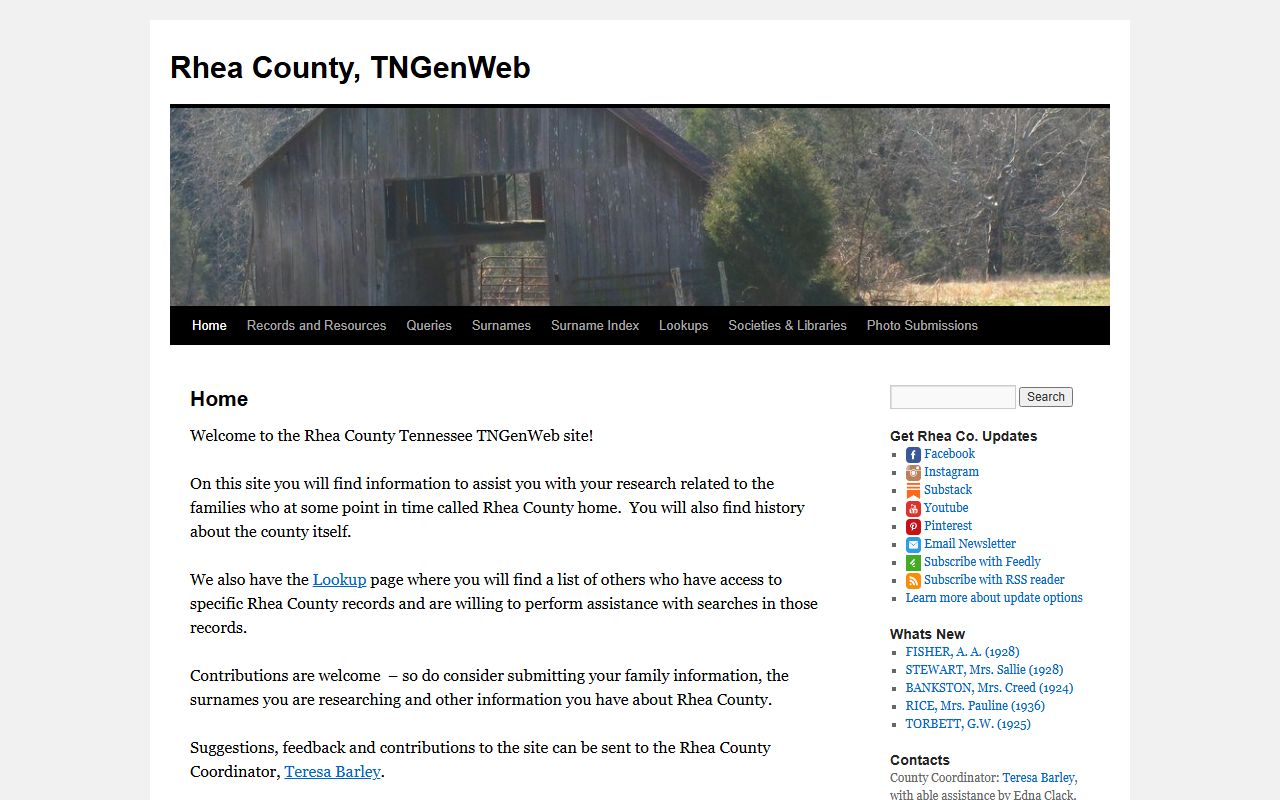
That image keeps the page tied to Rhea County families and reminds you to start with local clues before widening the search.
The Tennessee State Library and Archives at sos.tn.gov/tsla is a useful state fallback for Rhea County Genealogy because it holds county records, death indexes, and manuscript material that can support Dayton research.

Use that state image when a Rhea line needs older indexes, microfilm, or a wider family file than the county page can hold alone.
Rhea County Genealogy at State Repositories
State repositories are important when local Rhea County Genealogy work needs an older index or a different kind of document. TSLA is the first stop because it can hold county court material, death indexes, newspapers, and manuscript collections. The Tennessee Virtual Archive can add digitized images and searchable items. Those two resources work well together when you need an image or a name that the courthouse does not publish online.
The FamilySearch Tennessee records page is a broad follow-up source. It is useful when a Rhea surname shows up in another county, a marriage, or a probate line that crosses county borders. The Tennessee Office of Vital Records matters most for later certificates, while the Tennessee Electronic Library can help with census and family history materials.
Rhea County Genealogy works best when you treat the county and the state as one research path. Start local in Dayton, then use the state tools to widen the frame only as much as you need.
Rhea County Genealogy Search Tips
Rhea County Genealogy can move quickly if you begin with the courthouse and TNGenWeb together. The county seat is Dayton, so the place clue is easy. The harder part is deciding whether you need a deed, a marriage, a probate file, or a state certificate. Keep one family line at a time. That keeps the search clean.
A good order is TNGenWeb, courthouse, TSLA, TeVA, then FamilySearch. That keeps the local county first and the state second. It also gives you a way to test a surname before you ask for copies. If the name is rare, one local clue may be enough. If it is common, the state index can separate one family from another.
Rhea County Genealogy is especially useful for families with long ties to Dayton, the river, or the older Roane County border. Those lines can be easy to miss if you search only one spelling or one office. Work slowly and the county record trail becomes much clearer.
Rhea County Genealogy Links
Use Rhea County TNGenWeb for local leads, TSLA for state records support, TeVA for digitized images, and FamilySearch Tennessee for broad index work. That set covers most Rhea County Genealogy needs without losing the Dayton focus.
One strong county page and a few state tools are often enough to get a family line moving again.